From She Kitchen
Recipes from our kitchen
Eight plates from the courtyard this summer and 48 recipes from the notebook Chef Fatma has kept for years, all written for a home kitchen.
Measures: 1 cup = 200 ml, 1 tbsp = 15 ml, 1 tsp = 5 ml. Oven temperatures are for a conventional oven without a fan. If you have an allergy, please read the ingredients carefully.
Plates of the season 8 recipes
These recipes are inspired by the plates at our restaurant and adapted for cooking at home. The plates at the restaurant may differ from these recipes, so if you have an allergy, please ask us before you order.
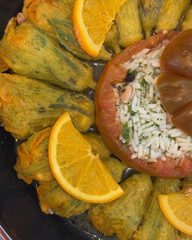 Stuffed courgette flowers and tomatoCourgette flowers filled with herbed rice, a stuffed tomato with its lid in the middle, and slices of orange.
Ingredients
- 12-15 courgette flowers
- 1 large tomato (about 250 g)
- 1 cup (200 ml, about 180 g) rice
- 1 onion
- Half a bunch (about 20 g) of dill or parsley
- Half a cup (100 ml) olive oil
- 1 orange
- 1 tsp (5 ml) salt
Method
- Soak the rice in warm water for 20 minutes and drain. Gently pinch out the stamen from each flower.
- Slice the top off the tomato like a lid and scoop out the inside with a spoon; chop the scooped flesh finely.
- Soften the onion in half the olive oil, then stir in the rice, tomato flesh, salt and chopped herbs.
- Fill the flowers and the tomato about two thirds full and put the lid back on the tomato. Set the tomato in the middle of the pan with the flowers around it.
- Arrange the orange slices on top, then drizzle over the remaining olive oil. Add hot water to come halfway up the stuffed flowers and tomato, cover and cook on a low heat for 25-30 minutes.
- Take the pan off the heat and leave it covered for 15 minutes; serve warm or at room temperature.
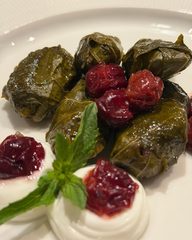 Vine-leaf rolls with sour cherriesStuffed vine leaves with sour cherries and yoghurt.
Ingredients
- About 30 vine leaves (brined or fresh)
- 1 cup (200 ml, about 180 g) rice
- 2 onions
- 1 cup (200 ml, about 150 g) pitted sour cherries (fresh or frozen)
- Half a cup (100 ml) olive oil
- 1 tsp (5 ml) sugar
- 1 tsp (5 ml) salt
- 1 tsp (5 ml) dried mint
- 200 g thick strained yoghurt, to serve
Method
- Soak brined leaves in a few changes of water to remove the salt; blanch fresh leaves in boiling water for a few seconds.
- Soften the onions in the olive oil, then stir in the rice, salt, sugar, mint and half the sour cherries.
- Place a little filling on the veined side of each leaf, roll tightly and pack into a pan.
- Scatter the rest of the cherries on top, add hot water to just cover, weigh down with an upturned plate and simmer gently for 40-45 minutes.
- Let them cool in the pan, then serve with yoghurt and the cherry cooking juices.
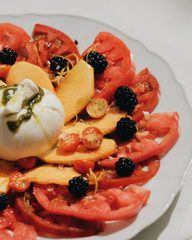 Burrata with tomatoes and summer fruitA summer plate of soft burrata, ripe tomatoes, blackberries and lemon zest.
Ingredients
- 1 burrata (about 200 g)
- 2-3 large ripe tomatoes (about 500 g)
- 150 g cherry tomatoes
- 1 ripe peach or nectarine (or 200 g ripe melon)
- 100 g blackberries
- Zest of 1 lemon
- 2-3 tbsp (30-45 ml) basil pesto or good olive oil
- Flaky salt
Method
- Take the burrata out of the fridge half an hour before serving; it is creamier when not fridge-cold.
- Slice the tomatoes, halve the cherry tomatoes, spread them on a plate and season with flaky salt.
- Slice the fruit thinly and tuck it between the tomatoes, then scatter the blackberries.
- Set the burrata in the middle and spoon over the pesto or olive oil.
- Finish with grated lemon zest and serve straight away.
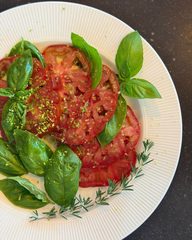 Tomato carpaccioThinly sliced tomatoes with basil, lime zest and olive oil.
Ingredients
- 3-4 large ripe tomatoes (about 600 g)
- A handful (about 15 g) of fresh basil
- 1 lime
- 3 tbsp (45 ml) extra virgin olive oil
- Flaky salt
Method
- Slice the tomatoes as thinly as you can with a sharp knife.
- Lay the slices on a wide plate, slightly overlapping, and sprinkle with flaky salt.
- Leave for a few minutes, then drizzle with olive oil.
- Tuck in the basil leaves and grate the lime zest over at the very end, just as you serve.
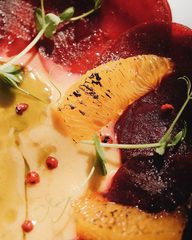 Beetroot with orangeThinly sliced beetroot with orange, pink peppercorns and fresh shoots.
Ingredients
- 3 medium beetroots (about 450 g)
- 2 oranges
- 3 tbsp (45 ml) extra virgin olive oil
- 1 tsp (5 ml) pink peppercorns
- A handful (about 30 g) of shoots (pea shoots or similar)
- A pinch of salt
Method
- Wash the beetroots, wrap them in foil and roast at 200°C for about 50-60 minutes, until a knife slides in easily.
- Once cool, peel and slice them thinly.
- Cut the peel and pith from the oranges and slice out the segments, saving the juice in a bowl.
- Whisk the juice with the olive oil and a pinch of salt, then spoon it over the beetroot.
- Tuck the orange segments in, crush the pink peppercorns lightly between your fingers, scatter them over and finish with the shoots.
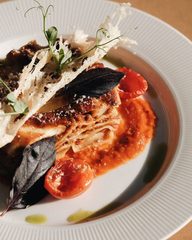 LasagneLayered lasagne with plenty of tomato.
Ingredients
- 12 dried lasagne sheets (about 250 g)
- 400 g minced beef
- 1 onion
- 2 tbsp (30 ml) olive oil
- 500 g grated fresh tomatoes or passata
- 1 tsp (5 ml) salt and some black pepper
- 750 ml béchamel sauce (shop-bought, or homemade: 60 g butter, 60 g plain flour, 750 ml milk, a pinch of salt and nutmeg; this makes about 750 ml, so use it all)
- 100 g grated parmesan
- A handful (about 15 g) of fresh basil
Method
- Soften the onion in the olive oil, add the mince and cook until its liquid has gone. Add the tomatoes, salt and pepper and simmer gently, stirring now and then, for 30-40 minutes until thick.
- If you are making the béchamel, melt the butter, stir in the flour and cook for 2 minutes. Whisk in the milk a little at a time and cook for 5-6 minutes until it thickens; season with salt and nutmeg. You will use the whole batch in the lasagne.
- Heat the oven to 180°C. If your sheets need boiling, cook them as the packet says and drain. Spread a few spoonfuls of sauce over the base of the dish, then layer sheets, sauce, béchamel and parmesan in that order, four times, finishing with béchamel and parmesan.
- Cover the dish with foil and bake for 25 minutes, then uncover and bake for another 15-20 minutes until golden.
- Let it rest for 15 minutes before cutting so the layers hold. Tear the basil leaves over the top as you serve.
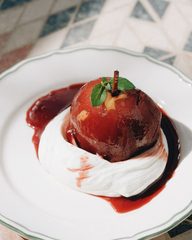 Poached pearA pear poached in a deep red sauce, set on cream.
Ingredients
- 4 firm pears (about 800 g)
- 1 litre red grape juice or sour cherry juice
- 3-4 tbsp (45-60 ml) sugar
- 1 cinnamon stick
- A few strips of lemon peel
- 200 ml cold whipping cream (at least 30% fat) or 200 g thick strained yoghurt
- 1 tbsp (15 ml) icing sugar for the cream (optional)
Method
- Peel the pears, keeping the stalks on, and trim the bases so they stand upright.
- Bring the juice to the boil with the sugar, cinnamon and lemon peel.
- Add the pears and simmer gently, turning now and then, for 20-30 minutes until a knife slides in easily.
- Take the pan off the heat and let the pears cool in the liquid; their colour deepens as they sit. Chill them afterwards if you like.
- Lift out the pears. Boil the liquid over a medium heat until about 250 ml is left; depending on the pan and the heat this takes 20-30 minutes. It is ready when it coats the back of a spoon in a thin layer, and it thickens a little more as it cools. Let it cool a little.
- Whip the cold cream (with the icing sugar, if using) until it holds soft peaks. If you are using yoghurt, there is no need to whip it; just stir it smooth.
- Spread the cream on the plate, set a pear on top and spoon the syrup around it. Serve the pears at room temperature or chilled.
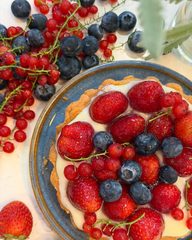 Summer berry tartCrisp pastry, cream, strawberries, blueberries and redcurrants.
Ingredients
- Pastry (or use a shop-bought baked 22-24 cm case)
- 200 g plain flour
- 100 g cold butter, diced
- 50 g icing sugar
- 1 egg yolk
- 1-2 tbsp (15-30 ml) cold water
- A pinch of salt
- Filling
- 200 ml cold whipping cream or double cream (at least 30% fat)
- 2 tbsp (30 ml) icing sugar and a little vanilla
- 250 g strawberries
- 100 g blueberries
- A few sprigs (about 50 g) of redcurrants
- 2 tbsp (30 ml) apricot jam
Method
- If you are using a shop-bought baked case, go straight to step 5. Mix the flour, icing sugar and salt, then rub in the cold butter with your fingertips until it looks like coarse sand.
- Add the egg yolk and cold water and bring the dough together without kneading. Shape it into a flat disc, wrap it and chill for 30 minutes.
- Roll the pastry out 3-4 mm thick, line the tin and prick the base with a fork. Chill the lined tin for 15 minutes; cold pastry shrinks less in the oven.
- Heat the oven to 180°C. Line the pastry with baking paper, fill it with dried beans or baking weights and bake for 15 minutes. Remove the paper and weights and bake for another 10-12 minutes until golden. Let it cool completely.
- Whip the cold cream with the icing sugar and vanilla until it holds soft peaks that just bend over when you lift the whisk. A cold bowl and whisk help it whip.
- Spread the cream into the case close to serving so the pastry stays crisp.
- Arrange the strawberries, blueberries and redcurrants on top.
- Warm the jam with a few drops of water and brush it over the fruit for shine.
From the kitchen notebook
Fatma's notebook
Cakes, desserts, pastry, biscuits and breads from the handwritten notebook Chef Fatma has kept for years. Some recipes listed only the ingredients, so we wrote out the method for a home kitchen.
Cakes 15 recipes
Banana breadA moist loaf cake made with ripe bananas, chocolate and walnuts.
Ingredients
- 1 1/3 cups (about 300 g) mashed banana (about 3 ripe bananas)
- 1/3 cup (about 65 ml) sunflower oil
- 1/2 cup (100 ml, about 90 g) soft brown sugar
- 2 eggs
- 1 tsp (5 ml) vanilla powder
- 2 tbsp (30 ml) milk
- 1 3/4 cups (350 ml, about 210 g) plain flour
- 1 tsp (5 ml) bicarbonate of soda
- 1 tsp (5 ml) ground cinnamon
- 1/2 tsp (2.5 ml) salt
- 50 g chopped chocolate
- 50 g roughly chopped walnuts (keep a few back for the top)
Method
- Heat the oven to 175°C. Grease and flour a 25 cm loaf tin, or line it with baking paper.
- Mash the bananas with a fork in a large bowl. Add the oil, brown sugar, eggs, vanilla and milk and whisk until combined.
- Sift the flour, bicarbonate of soda, cinnamon and salt together, add to the banana mixture and stir with a spoon until no dry flour remains. Do not overmix.
- Fold in the chocolate and most of the walnuts. Pour the batter into the tin and scatter the remaining walnuts on top.
- Bake at 175°C for 50-55 minutes. If the top darkens too quickly, cover it loosely with foil. A skewer inserted in the centre should come out clean.
- Leave in the tin for 10 minutes, then turn out onto a wire rack, cool completely and slice.
Note: For a larger tin, use 5 bananas, 1 cup (200 ml) oil, 1 cup (200 ml) soft brown sugar, 1 sachet (5 g) vanillin sugar, 1/2 cup (100 ml) milk, 3 cups (600 ml) flour and 4 eggs, and increase the bicarbonate of soda, cinnamon, salt and baking time to match.
Carrot cakeA moist oil-based cake with grated carrot, walnuts and cinnamon.
Ingredients
- 250 g vegetable oil
- 250 g caster sugar
- 4 eggs
- 250 g plain flour
- 2 tsp (10 g) baking powder
- 1 tsp (5 ml) ground cinnamon
- 1 tsp (5 ml) vanilla powder
- 4 medium carrots (about 400 g), grated
- 100 g walnuts, roughly chopped
Method
- Heat the oven to 180°C (conventional). Grease and flour a 24 cm springform tin.
- Whisk the eggs and sugar until pale, then add the oil and vanilla and mix.
- Sift in the flour, baking powder and cinnamon and mix until combined.
- Add the grated carrots and walnuts and fold in gently with a spatula.
- Pour the batter into the tin and bake for 50-60 minutes, until a skewer inserted in the centre comes out clean. If the top browns too quickly, cover it with foil.
- Leave in the tin for 10 minutes, then turn out onto a wire rack to cool.
Flourless chocolate cakeA flourless cake made with dark chocolate and whisked egg whites.
Ingredients
- 180 g dark chocolate (50-60% cocoa solids)
- 4 fresh eggs
- 2 tbsp (30 ml) cocoa powder
- 10 g (2 tsp) baking powder
- 1 pinch of salt
Method
- Heat the oven to 170°C (conventional, not fan) and line a 20 cm round cake tin with baking paper.
- Break the chocolate into pieces and melt it in a bowl set over a pan of barely simmering water, without letting the bowl touch the water. Leave it to cool for 5-10 minutes.
- Separate the eggs. Whisk the whites with the pinch of salt until they form stiff peaks.
- Beat the yolks in a separate bowl, then stir in the cooled chocolate. Sift in the cocoa and baking powder and mix to a thick, smooth paste.
- Stir a third of the whites into the chocolate mixture to loosen it. Fold in the rest with a large spoon or your hand, lifting from the bottom so the foam is not knocked out.
- Pour the batter into the tin, level the top and bake for 25-30 minutes. The cake is ready when the top is risen and cracked and a skewer comes out with a few moist crumbs but no wet batter.
- Leave the cake in the tin for 15 minutes, then turn it out and cool it; it will sink a little as it cools, which is normal.
Note: If you find it too bitter, dust the top with icing sugar before serving.
Fruit muffinsMuffins made with yoghurt, milk and cream, with fruit folded into the batter.
Ingredients
- Wet ingredients
- 80 ml sunflower oil
- 3 eggs
- 100 g caster sugar
- 125 ml milk
- 70 g whipping cream
- 100 g plain yoghurt
- 1 tsp (5 ml) vanilla powder
- Dry ingredients
- 280 g plain flour (1 tbsp set aside for the fruit)
- 1.5 tbsp (about 22 ml) baking powder
- 1 pinch of salt
- Fruit
- 150 g blueberries, raspberries or small chopped strawberries
Method
- Heat the oven to 200°C (conventional, not fan) and line a 12-hole muffin tin with paper cases.
- Whisk the oil, eggs, sugar, milk, cream, yoghurt and vanilla together in a bowl.
- Set aside 1 tbsp of the flour. Sift in the rest with the baking powder and salt and fold with a spatula until no dry flour is left.
- Toss the fruit in the reserved flour and fold it gently into the batter.
- Divide the batter between the cases, filling each about three quarters full.
- Bake at 200°C for 5 minutes, then reduce the heat to 180°C and bake for another 15-18 minutes, until golden on top and a skewer inserted in the centre comes out clean.
- Leave the muffins in the tin for 5 minutes, then move them to a wire rack to cool a little.
Note: Do not skip coating the fruit in flour; it keeps the fruit from sinking to the bottom of the batter.
Jam cakeA soft, easy cake made with jam and walnuts.
Ingredients
- 1 cup (200 ml, about 280 g) jam
- 1 tsp (5 ml) bicarbonate of soda
- 3 eggs
- 100 ml sunflower oil
- 2 cups (400 ml, about 240 g) plain flour
- 1 sachet (5 g) vanillin sugar or 1 tsp (5 ml) vanilla powder
- 1/2 tsp (2.5 ml) baking powder
- 1/2 cup (about 50 g) roughly chopped walnuts
Method
- Heat the oven to 180°C. Grease and flour a 22 cm cake tin.
- Mix the jam and bicarbonate of soda in a large bowl and leave for 2-3 minutes, until the jam foams slightly.
- Add the eggs, oil and vanilla and whisk until well combined.
- Sift in the flour and baking powder and stir until the batter is smooth. Fold in the walnuts.
- Pour the batter into the tin and bake at 180°C for 40-45 minutes, until a skewer inserted in the centre comes out clean.
- Leave in the tin for 10 minutes, then turn out and slice once cool.
Note: A slightly tart jam, such as apricot or sour cherry, works well.
Lemon and yoghurt cakeA soft, moist cake made with yoghurt, lemon, butter and oil.
Ingredients
- 3 eggs
- 1 cup (200 ml) caster sugar
- 1 cup (200 ml) plain yoghurt
- 1/2 cup (100 ml) vegetable oil
- 1/2 cup (100 ml, about 90 g) butter, melted and cooled
- Juice of 1/2 lemon
- Zest of 1 lemon
- 1 tsp (5 ml) vanilla powder
- 3 cups (about 360 g) plain flour
- 2 tsp (10 g) baking powder
- 1 pinch of salt
Method
- Heat the oven to 180°C (conventional). Grease and flour a 22 cm cake tin.
- Whisk the eggs and sugar for about 3 minutes, until pale and thick.
- Add the yoghurt, oil, cooled melted butter, lemon juice, lemon zest and vanilla, and mix until combined.
- Sift in the flour, baking powder and salt in two or three batches and fold gently until just smooth.
- Pour the batter into the tin and bake for 40-45 minutes, until golden and a skewer inserted in the centre comes out clean.
- Leave in the tin for 10 minutes, then turn out onto a wire rack to cool.
Note: Bring the eggs and yoghurt to room temperature first, so the batter mixes smoothly.
Lemon and yoghurt muffinsSoft muffins made with two kinds of yoghurt, lemon zest and lemon juice.
Ingredients
- 4 eggs
- 150 g caster sugar
- 200 ml butter and sunflower oil mixture (100 ml melted butter, 100 ml sunflower oil)
- 100 ml thick yoghurt
- 100 ml fresh plain yoghurt
- 300 g plain flour
- 1 tbsp (15 ml) baking powder
- 1 tsp (5 ml) vanilla powder
- finely grated zest of 1 lemon
- 1 tbsp (15 ml) lemon juice
Method
- Heat the oven to 180°C (conventional, not fan) and line a 12-hole muffin tin with paper cases. Melt the butter and leave it to cool a little.
- Whisk the eggs and sugar for 2-3 minutes, until pale and slightly frothy.
- Stir in the cooled butter, sunflower oil, both yoghurts, vanilla, lemon zest and lemon juice.
- Sift in the flour and baking powder and fold with a spatula until no dry flour is left; do not overmix.
- Divide the batter between the cases, filling each about three quarters full.
- Bake for 20-25 minutes, until golden on top and a skewer inserted in the centre comes out clean.
- Leave the muffins in the tin for 5 minutes, then move them to a wire rack to cool a little.
Note: Bake the batter as soon as it is mixed, so the muffins rise better.
Lemon muffinsSoft muffins made with butter, oil, milk and lemon zest.
Ingredients
- 4 eggs
- 160 g caster sugar
- 100 g unsalted butter
- 80 g sunflower oil
- 100 ml milk
- finely grated zest of 1 lemon
- 250 g plain flour
- 2 tsp (10 ml) baking powder
- 1 tsp (5 ml) vanilla powder
Method
- Heat the oven to 180°C (conventional, not fan) and line a 12-hole muffin tin with paper cases. Melt the butter and leave it to cool a little.
- Whisk the eggs and sugar for 2-3 minutes, until pale and slightly frothy.
- Stir in the cooled butter, oil, milk, lemon zest and vanilla.
- Sift in the flour and baking powder and fold with a spatula until no dry flour is left; do not overmix.
- Divide the batter between the cases, filling each about three quarters full.
- Bake for 20-25 minutes, until golden on top and a skewer inserted in the centre comes out clean.
- Leave the muffins in the tin for 5 minutes, then move them to a wire rack to cool a little.
Note: The muffins keep in an airtight container at room temperature for 2 days.
Orange cakeA soft cake scented with orange juice and zest.
Ingredients
- 4 eggs
- 1 1/2 cups (300 ml) caster sugar
- Finely grated zest of 1 orange
- 1/2 cup (100 ml) freshly squeezed orange juice
- 1/2 cup (100 ml) milk
- 1 cup (200 ml) sunflower oil
- 3 cups (600 ml, about 360 g) plain flour
- 10 g (2 tsp) baking powder
- 1/2 tsp (2.5 ml) bicarbonate of soda
- 1 sachet (5 g) vanillin sugar or 1 tsp (5 ml) vanilla powder
Method
- Heat the oven to 175°C. Grease and flour a 24 cm cake tin. Grate the zest from the orange, then squeeze the juice.
- Whisk the eggs and sugar for 4-5 minutes, until pale and increased in volume.
- Add the oil, orange juice, milk, zest and vanilla and whisk until combined.
- Sift in the flour, baking powder and bicarbonate of soda and mix until the batter is smooth.
- Pour the batter into the tin and bake at 175°C for 45-50 minutes, until a skewer inserted in the centre comes out clean.
- Leave in the tin for 10 minutes, then turn out, cool and slice.
Note: Grate only the orange part of the peel, as the white pith makes the cake bitter.
Orange cake (makes 2 loaves)A moist oil-based cake flavoured with orange juice and zest, baked in two tins.
Ingredients
- 6 eggs
- 350 g caster sugar
- 350 g orange juice (about 350 ml)
- Zest of 1 orange
- 360 ml vegetable oil
- 500 g plain flour
- 10 g (2 tsp) baking powder
- 1 sachet (5 g) vanillin sugar or 1 tsp (5 ml) vanilla powder
Method
- Heat the oven to 175°C (conventional). Grease and flour two 25 cm loaf tins.
- Whisk the eggs and sugar until pale and thick.
- Add the orange juice, oil, orange zest and vanillin, and mix until combined.
- Sift in the flour and baking powder in several batches and fold gently until smooth.
- Divide the batter evenly between the two tins and bake for 45-50 minutes, until golden and a skewer inserted in the centre comes out clean.
- Leave in the tins for 10 minutes, then turn out onto a wire rack to cool.
Note: If you like, fold some chopped fruit into the batter before pouring it into the tins.
Savoury olive and cheese loafA savoury loaf cake with olives, cheese and tomato, made with olive oil and milk.
Ingredients
- 225 g plain flour
- 1 level tbsp (15 ml) baking powder
- 4 eggs
- 100 ml olive oil
- 100 ml milk
- 100 g kaşar or mild Cheddar, cut into small cubes
- 50 g olives, pitted and roughly chopped
- 90 g tomato, finely diced and drained
Method
- Heat the oven to 180°C (conventional). Grease and flour a 25 cm loaf tin, or line it with baking paper.
- Sift the flour and baking powder into a large bowl and set 1 tablespoon aside.
- Whisk the eggs, olive oil and milk together in a separate bowl until smooth.
- Pour the liquid into the flour and fold gently until you have a smooth batter; do not overmix.
- Toss the cheese, olives and tomato in the reserved flour and fold them into the batter.
- Spoon the batter into the tin, level the top and bake for 40-45 minutes, until golden and a skewer inserted in the centre comes out clean.
- Leave in the tin for 10 minutes, then turn out and slice while warm or at room temperature.
Note: The cheese and olives are salty enough, so no extra salt is added to the batter.
Vegan cocoa and almond cakeAn egg-free, dairy-free cocoa cake topped with flaked almonds.
Ingredients
- For the batter
- 1.5 cups (300 ml) plain flour
- 1 cup (200 ml) caster sugar
- 3 tbsp (45 ml) cocoa powder
- 10 g (2 tsp) baking powder
- 1 sachet (5 g) vanillin sugar or 1 tsp (5 ml) vanilla powder
- 5 tbsp (75 ml) vegetable oil
- 1 tbsp (15 ml) apple cider vinegar
- 1 cup (200 ml) water
- For the top
- 3 tbsp (about 25 g) flaked almonds
Method
- Heat the oven to 180°C (conventional). Grease and flour a 20 cm round cake tin.
- Sift the flour, sugar, cocoa and baking powder into a large bowl and mix.
- Add the water, oil, vinegar and vanillin and whisk until you have a smooth, runny batter.
- Pour the batter into the tin and scatter the flaked almonds over the top.
- Bake for 30-35 minutes, until a skewer inserted in the centre comes out clean.
- Leave in the tin for 10 minutes, then turn out onto a wire rack to cool.
Note: If the almonds darken too much, cover the cake loosely with aluminium foil for the last few minutes.
Vegan cocoa cakeAn egg-free, dairy-free cocoa cake raised with bicarbonate of soda and vinegar.
Ingredients
- Dry ingredients
- 1.5 cups (300 ml) plain flour
- 1 cup (200 ml) caster sugar
- 1 tbsp (15 ml) cocoa powder
- 1 tsp (5 ml) bicarbonate of soda
- 1/2 tsp (2.5 ml) salt
- Wet ingredients
- 1 cup (200 ml) water
- 80 ml vegetable oil
- 2 tsp (10 ml) vinegar
- 1 tsp (5 ml) vanilla powder
Method
- Heat the oven to 180°C (conventional). Grease and flour a 20 cm round cake tin.
- Sift the flour, sugar, cocoa, bicarbonate of soda and salt into a large bowl and mix.
- Add the water, oil, vinegar and vanilla and whisk until you have a smooth, runny batter. The soda reacts with the vinegar straight away, so do not let the batter stand.
- Pour into the tin and bake for 30-35 minutes, until a skewer inserted in the centre comes out clean.
- Leave in the tin for 10 minutes, then turn out onto a wire rack to cool.
Vegan lemon cakeA light cake made without milk, eggs or butter, finished with a lemon icing.
Ingredients
- For the cake
- 2.5 cups (500 ml, about 300 g) plain flour
- 1 cup (200 ml, about 180 g) caster sugar
- 10 g (2 tsp) baking powder
- 1 tsp (5 ml) bicarbonate of soda
- Zest and juice of 1 lemon
- 1/2 cup (100 ml) vegetable oil
- 170 ml water
- For soaking
- 1 cup (about 120 g) icing sugar
- Juice of 1/2 lemon
Method
- Preheat the oven to 180°C (conventional, top and bottom heat). Grease and flour the cake tin or line it with baking paper.
- Mix the flour, baking powder and bicarbonate of soda in a bowl and sift them together.
- In another bowl, whisk the sugar, oil, water, lemon zest and lemon juice until the sugar disperses.
- Pour the liquid into the dry ingredients and fold until smooth, without overmixing. The lemon wakes up the bicarbonate straight away, so put the batter into the tin without delay.
- Bake on the middle shelf for 30-35 minutes, until a skewer inserted in the centre comes out clean.
- Leave the cake in the tin for 10 minutes, turn it out onto a serving plate and prick the top lightly with a skewer while it is still warm.
- Stir the icing sugar with the lemon juice until it forms a pourable icing, then pour it over the warm cake. Leave it for about 20 minutes to set before slicing.
Note: If the icing is too thick, loosen it with a few drops of water.
Vegan vanilla cakeA plain, soft vanilla cake made without eggs or dairy.
Ingredients
- 1 cup (200 ml) warm water
- 1/2 cup (100 ml) vegetable oil
- 1 cup (200 ml) caster sugar
- 2 tbsp (30 ml) cornflour
- 1 tsp (5 ml) vanilla powder
- 2 cups (400 ml, about 240 g) plain flour
- 10 g (2 tsp) baking powder
Method
- Heat the oven to 180°C (conventional). Grease and flour a 22 cm cake tin.
- Stir the warm water, sugar and oil together in a bowl until the sugar dissolves, then add the vanilla.
- Sift the flour, cornflour and baking powder and add them to the liquid in two or three batches, mixing until smooth.
- Pour the batter into the tin and bake for 35-40 minutes, until pale golden and a skewer inserted in the centre comes out clean.
- Leave in the tin for 10 minutes, then turn out onto a wire rack to cool.
Desserts 14 recipes
Apricot uyutmaA traditional chilled pudding of dried apricots and plant-based milk, rested in glasses.
Ingredients
- 140 g dried apricots
- 400 ml plant-based milk (such as almond or oat)
Method
- Chop the dried apricots finely and put them in a bowl.
- Heat the plant-based milk in a small pan until steaming but not boiling.
- Pour the hot milk over the chopped apricots, cover and leave for 20 minutes.
- Blend the mixture until completely smooth.
- Divide it between 4 small glasses. Cover and leave in the fridge, away from the light, for at least 4 hours or overnight, until it thickens.
- Serve chilled.
Note: If the pudding is too thick, loosen it with a few tablespoons of cold plant-based milk before serving.
BrowniesA dense, fudgy chocolate bake made with dark chocolate, cocoa and chocolate chunks.
Ingredients
- 200 g butter
- 250 g dark chocolate
- 3 eggs
- 200 g caster sugar
- 1 sachet (5 g) vanillin sugar or 1 tsp (5 ml) vanilla powder
- 100 g plain flour
- 20 g cocoa powder
- 1/2 tsp (2.5 ml) baking powder
- 150 g roughly chopped chocolate
Method
- Heat the oven to 180°C. Line a 20 x 30 cm tray with baking paper.
- Melt the butter and dark chocolate in a bowl over simmering water, or in the microwave in 30-second bursts, stirring until smooth. Leave to cool for 10 minutes.
- Whisk the eggs, sugar and vanilla for 2-3 minutes, then stir in the cooled chocolate mixture.
- Sift in the flour, cocoa and baking powder and fold with a spatula until smooth. Fold in the chopped chocolate.
- Pour the batter into the tray, level it and bake at 180°C for 25 minutes. The edges should be set and a skewer in the centre should come out with a few moist crumbs.
- Cool in the tray for at least 1 hour, then cut into 12 squares.
Note: For a larger tray (about 30 x 40 cm), use 4 eggs, 2 cups (400 ml) caster sugar, 1 cup (200 ml) flour, 400 g butter, 500 g dark chocolate, 2 sachets (10 g) vanillin sugar and 1 tsp (5 ml) baking powder; the baking time may be longer, so check with a skewer.
Chocolate mousseA light, creamy chocolate mousse made with just cream and chocolate.
Ingredients
- 400 g double cream (cold, at least 35% fat)
- 300 g dark chocolate (55-70% cocoa)
Method
- Chop the chocolate finely and put it in a large bowl.
- Heat 200 g of the cream in a small pan until the edges start to bubble, without boiling. Pour it over the chocolate, leave for 1 minute, then stir until smooth and glossy.
- Leave the chocolate mixture for about 15 minutes, until it is just warm.
- Whip the remaining 200 g of cold cream to soft peaks; do not overwhip it.
- Stir a third of the whipped cream into the chocolate mixture to loosen it, then gently fold in the rest with a spatula, lifting from the bottom.
- Divide the mousse between 6 small glasses, cover and chill for at least 4 hours, ideally overnight.
Note: If the chocolate mixture is too hot when you fold it in, the whipped cream melts, so make sure it is only just warm.
Crème brûléeA baked orange-scented cream custard with a thin, crisp caramelised sugar top.
Ingredients
- For the custard
- 5 fresh egg yolks
- 80 g caster sugar
- 500 g double cream
- Peel of 1 orange, in strips without the white pith
- For the top
- 4 tsp (about 20 g) caster sugar
Method
- Heat the oven to 120°C (conventional). Warm the cream and orange peel in a small pan; as soon as it comes to the boil, take it off the heat, cover and leave to infuse for 10 minutes.
- Whisk the egg yolks and sugar until pale, without making them foamy.
- Strain the cream to remove the peel. Add the egg mixture to the cream a little at a time, stirring constantly; the cream should be warm rather than hot, so the eggs do not scramble.
- Strain the custard once more, skim off any bubbles and divide it between four 150 ml ramekins.
- Stand the ramekins in a deep roasting tin and pour in hot water to come halfway up their sides. Bake for 60 minutes, until the edges are set and the centre still wobbles slightly.
- Lift the ramekins out of the water and leave to cool, then cover and chill for at least 4 hours.
- Just before serving, sprinkle a thin, even layer of sugar over each custard, caramelise it with a kitchen blowtorch and leave for 1-2 minutes to harden.
Layered biscuit and cream dessertA single-serving dessert of a biscuit base, a cream cheese layer and caramelised biscuit spread.
Ingredients
- Base
- 2-3 tbsp (about 20 g) crushed biscuits
- 2 tsp (10 ml) melted butter
- Cream layer
- 1 tbsp (15 ml) cream cheese or labneh
- 3 tbsp (45 ml) whipping cream
- 2 tsp (10 ml) icing sugar
- Topping
- 1 tbsp (15 ml) caramelised biscuit (speculoos) spread
Method
- Crush the biscuits finely with a rolling pin inside a bag, then mix them with the melted butter until they resemble damp sand.
- Spread the mixture over the bottom of a small glass or bowl and press it down firmly with the back of a spoon.
- Beat the cream cheese or labneh with the icing sugar until smooth.
- In a separate bowl, whisk the cream until it holds soft peaks, then fold it gently into the cheese mixture.
- Spread the cream over the biscuit base and put the glass in the fridge.
- Chill for at least 2 hours, then spread the caramelised biscuit spread on top just before serving.
Note: To serve more people, multiply all the quantities by the number of servings.
Lemon cheesecakeA baked cheesecake of labneh and cream with lemon and orange zest on a biscuit base.
Ingredients
- For the base
- 250 g plain, dry biscuits (such as rich tea)
- 120 g butter, melted
- For the filling
- 1 kg labneh (strained yoghurt cheese), at room temperature
- 375 g caster sugar
- 144 g cornflour
- 337 g double cream
- 187 g fresh eggs (about 4 eggs)
- Zest and juice of 1 lemon
- Zest of 1 orange
Method
- Heat the oven to 170°C (conventional). Line the base of a 26 cm springform tin with baking paper. Crush the biscuits finely, mix them with the melted butter, press the mixture firmly into the base and chill while you make the filling.
- Mix the sugar and cornflour. Put the labneh in a large bowl, add the sugar mixture and beat until completely smooth and free of lumps.
- Add the fresh eggs one at a time, then the cream, lemon juice and the lemon and orange zest, and mix on low speed until smooth.
- Pour the filling over the base and tap the tin on the worktop to release air bubbles.
- Bake on the middle shelf for 65-75 minutes, until the edges are set, the top is pale golden and the centre still wobbles slightly.
- Turn off the oven, prop the door open and leave the cheesecake inside for 1 hour to reduce cracking, then cool to room temperature in the tin.
- Cover and chill for at least 6 hours, then remove from the tin and slice.
Note: Sprinkle a little extra lemon zest on top just before serving.
MagnoliaA cold dessert of milk custard, whipped cream and chopped fruit, set in small bowls.
Ingredients
- For the custard
- 1 l milk
- 1 cup (200 ml) sugar
- 2 egg yolks
- 2 tbsp (30 ml) cornflour
- 2 tbsp (30 ml) plain flour
- 1 tsp (5 ml) vanilla powder
- For the cream and fruit
- 250 g double cream, well chilled
- 2 tbsp (30 ml) low-salt white cheese (such as mild feta), mashed
- 300 g chopped fruit (banana, strawberries or other seasonal fruit)
Method
- Mix the sugar, cornflour and flour in a large pan. Add the egg yolks and 1 cup (200 ml) of the milk and whisk until smooth.
- Add the rest of the milk and cook over a medium heat, stirring constantly, until it thickens and starts to bubble. Cook for 2 more minutes, then take off the heat.
- Add the vanilla and the mashed white cheese and whisk until the cheese has completely blended in. Press cling film directly onto the surface to stop a skin forming and cool to room temperature.
- Whip the chilled cream until it holds soft peaks and fold it gently into the cooled custard.
- Spoon the cream into small bowls in layers with the chopped fruit, finishing with a layer of cream.
- Chill for at least 3 hours before serving.
Note: If you use banana, chop it close to serving time so it does not darken.
No-bake coconut and labneh cakeA chilled cake of labneh, cream and coconut, set with gelatine and topped with fruit.
Ingredients
- For the cream
- 300 g labneh
- 100 g double cream
- 70 g white chocolate
- 70 g desiccated coconut
- 150 g icing sugar
- 20 g powdered gelatine
- 100 ml cold water (for the gelatine)
- For the top
- 200 g frozen fruit (strawberries, raspberries or blackberries)
Method
- Line the base and sides of an 18 cm springform tin with baking paper.
- Heat the cream until just below boiling and pour it over the white chocolate, broken into small pieces. Leave for 1-2 minutes, stir until smooth and let it cool until lukewarm.
- Sprinkle the gelatine over the 100 ml cold water and leave for 5-10 minutes. Heat in the microwave in 10-second bursts, without boiling, until liquid.
- Beat the labneh and icing sugar until smooth, then stir in the cooled chocolate cream and the coconut.
- Stir a few spoonfuls of the labneh mixture into the liquid gelatine, then tip it all into the main mixture and stir quickly. Pour into the tin and level the surface.
- Cover and chill for at least 6 hours. Remove from the tin and arrange the fruit, thawed in the fridge and drained, on top.
Note: Drain the fruit well, as extra juice will stain the surface of the cake.
No-bake energy ballsSmall no-bake balls of banana, oats, dried apricot and hazelnut, bound with tahini and peanut butter.
Ingredients
- 2 ripe bananas
- 8 dried apricots
- 1 cup (200 ml) rolled oats
- 1 cup (200 ml) hazelnuts
- 4 tbsp (60 ml) tahini
- 2 tbsp (30 ml) peanut butter
- 2 tbsp (30 ml) date purée
- 2-3 drops alcohol-free almond flavouring
Method
- Chop the hazelnuts finely with a knife or in a food processor.
- If the dried apricots are firm, soak them in warm water for 10 minutes, drain and chop them small.
- Mash the bananas with a fork in a large bowl until smooth, then stir in the tahini, peanut butter, date purée and almond flavouring.
- Add the oats, hazelnuts and apricots and mix until the mixture holds together when pressed.
- Cover the bowl and chill the mixture for 30 minutes so it firms up and is easier to shape.
- With damp hands, roll the mixture into walnut-sized balls of about 25 g and set them on a tray.
- Keep the balls in a covered container in the fridge and eat them within 3 days.
Note: If the mixture sticks to your hands, work in 1-2 tbsp more oats.
No-bake oat and seed barsOat, seed and peanut butter bars with dark chocolate, set in the fridge without baking.
Ingredients
- 1 cup (200 ml) rolled oats
- 2 tbsp (30 ml) chia seeds
- 2 tbsp (30 ml) flaxseeds
- 2 tbsp (30 ml) sesame seeds
- 3 tbsp (45 ml) chopped dark chocolate
- 2 tbsp (30 ml) peanut butter
- 2 tbsp (30 ml) coconut oil
- 1 tbsp (15 ml) honey
Method
- Toast the oats, flaxseeds and sesame seeds in a dry frying pan over a medium heat for 4-5 minutes, stirring constantly, until fragrant and lightly coloured. Tip them into a large bowl and add the chia seeds.
- Warm the coconut oil, peanut butter and honey in a small pan over a low heat until melted. Take it off the heat, add the chopped chocolate and stir for 1-2 minutes until it melts.
- Pour the warm mixture over the dry ingredients and stir until everything is evenly coated. Leave for 5 minutes so the chia seeds absorb some of the liquid.
- Press the mixture firmly into a dish of about 15 x 20 cm lined with baking paper, using the back of a spoon or damp hands to level it.
- Chill in the fridge for at least 2 hours, until completely firm.
- Lift it out using the paper and cut into 8 bars with a sharp knife.
Note: Coconut oil softens at room temperature, so keep the bars in a covered container in the fridge.
Panna cottaA set cream dessert made with milk, cream and gelatine, served in glasses.
Ingredients
- 500 ml milk
- 1 kg (about 1 litre) double cream
- 225 g sugar
- 45 g powdered gelatine
- 200 ml cold water (for the gelatine)
Method
- Sprinkle the gelatine over the 200 ml cold water and leave for 5-10 minutes.
- Heat the milk, cream and sugar in a large pan, stirring, until the sugar has dissolved and small bubbles form at the edges. Do not let it come to a full boil, as it may boil over.
- Remove the pan from the heat, add the softened gelatine and stir until completely dissolved.
- Strain the mixture and leave it to cool for 10-15 minutes, stirring occasionally.
- Divide it between the glasses and let them cool to room temperature, then move them to the fridge.
- Chill for at least 4 hours, until set.
Note: Cover the glasses with cling film and keep them in the fridge for up to 2 days.
San Sebastian cheesecakeA Spanish-style cheesecake baked at a high heat until deeply browned on top and creamy inside.
Ingredients
- 400 g cream cheese, at room temperature
- 200 g double cream (at least 35% fat)
- 130 g caster sugar
- 1 g (1 small pinch) salt
- 16 g cornflour
- 1 sachet (5 g) vanillin sugar or 1 tsp (5 ml) vanilla powder
- 2 fresh eggs, at room temperature
Method
- Preheat the oven to 220°C (conventional, top and bottom heat). Line an 18 cm springform tin with crumpled baking paper that overhangs the sides.
- Mix the sugar and cornflour in a bowl.
- Add this to the cream cheese and work it in thoroughly with your hand or a spatula until smooth.
- Add the eggs one at a time, mixing after each.
- Stir the salt and vanilla into the cream, add it to the cheese mixture and mix gently, without beating in air, until smooth, runny and free of lumps.
- Pour the mixture into the tin and tap it on the worktop to release air bubbles. Bake on the middle shelf for 25-30 minutes, until the top is deep brown, the edges have puffed up and the centre still wobbles slightly.
- Let the cheesecake cool in the tin at room temperature for 1 hour, then chill in the fridge for at least 4 hours, ideally overnight. Remove from the tin and slice while cold.
Note: For a larger tin (20-22 cm), use 600 g cream cheese, 300 g double cream, 205 g caster sugar, 2 g salt, 24 g cornflour, 1 sachet (5 g) vanillin sugar or 1 tsp (5 ml) vanilla powder and 3 fresh eggs, and bake for about 35 minutes.
San Sebastian cheesecake (large tin)A baked cheesecake with a dark, caramelised top and a soft, creamy centre.
Ingredients
- 850 g cream cheese, at room temperature
- 250 g caster sugar
- 28 g cornflour
- 5 fresh eggs, at room temperature
- 500 g double cream
- 1 tsp (5 ml) vanilla powder
Method
- Heat the oven to 200°C (conventional, top and bottom heat). Line a 24 cm springform tin with two sheets of baking paper, crumpling them slightly so they stand about 4 cm above the rim.
- Mix the sugar and cornflour in a small bowl. Put the cream cheese in a large bowl, add the sugar mixture and beat until smooth.
- Add the fresh eggs one at a time, beating until each is combined before adding the next.
- Add the cream and vanilla and mix on a low speed until smooth and runny. Do not beat for long, so that not too much air goes in.
- Pour the mixture into the tin and tap it on the worktop to release air bubbles. Bake on the middle shelf for 45-50 minutes, until the top is deep brown, the edges are set and the centre still wobbles slightly when the tin is shaken.
- Leave to cool to room temperature in the tin, then cover and chill for at least 4 hours, ideally overnight. Remove from the tin and slice.
Note: Dip the knife in hot water and wipe it between cuts for clean slices.
TiramisuA chilled dessert of coffee-soaked sponge fingers layered with a labneh cream.
Ingredients
- For the egg cream
- 4 fresh egg yolks
- 5 tbsp (about 60 g) caster sugar
- For the cream mixture
- 1 l (1000 ml) cold double cream
- 5 tbsp (about 100 g) labneh
- 1 tsp (5 ml) salt
- To assemble
- About 400 g sponge fingers (2 packets)
- 2 cups (400 ml) strong coffee (espresso or strongly brewed filter coffee)
- 2 tbsp (30 ml) cocoa powder (for dusting)
Method
- Brew the coffee strong and let it cool completely.
- Whisk the egg yolks and sugar constantly in a bowl set over a pan of barely simmering water, without letting the bowl touch the water. When the mixture is pale and coats the back of a spoon (about 8-10 minutes, around 70°C), take it off the heat and keep whisking until lukewarm.
- Whip the cold cream, labneh and salt with an electric whisk until it holds soft peaks.
- Add the cooled egg mixture to the cream and fold gently from the bottom up, keeping the cream light.
- Dip the sponge fingers into the coffee for one second each and lay them in a single layer in the dish. Spread half the cream over them, then dip and lay a second layer of sponge fingers and cover with the remaining cream.
- Cover and chill in the fridge for at least 6 hours, ideally overnight.
- Dust with cocoa through a sieve just before serving.
Note: The yolks are warmed over the pan, but still use fresh eggs and keep the tiramisu in the fridge until you serve it.
Pastry and creams 9 recipes
Coffee ganacheA white chocolate and coffee ganache that is whipped until it can be piped.
Ingredients
- 250 ml double cream
- 2 tsp (about 4 g) instant coffee
- 200 g white chocolate
Method
- Break the white chocolate into small pieces and put it in a bowl.
- Heat the cream and coffee in a small pan, stirring, until small bubbles form at the edges but it is not boiling.
- Pour the hot cream over the chocolate, leave for 1 minute, then stir until smooth and glossy.
- Let the ganache cool to room temperature, cover the surface with cling film and chill for at least 6 hours.
- Whip the cold ganache with an electric whisk until it is pale and fluffy.
- Spoon it into a piping bag and pipe it onto cakes, tarts or dessert cups.
Note: If the ganache is very firm, leave it at room temperature for 10-15 minutes before whipping; it will split if overwhipped, so stop as soon as it holds its shape.
Egg-free tart pastryA lightly sweet tart base made with flour, butter and cold water, with no egg.
Ingredients
- 180 g plain flour
- 2 tbsp (about 25 g) caster sugar
- 100 g cold butter, cut into small cubes
- 70 ml cold water
- 1 tsp (5 ml) vanilla powder
Method
- Put the flour, sugar and cold butter in a large bowl and rub them together with your fingertips, or pulse in a food processor, until the butter looks like coarse sand.
- Add the vanilla, then add the cold water a little at a time and stop as soon as the dough comes together; you may not need it all. Do not overwork it.
- Shape the dough into a flat disc, wrap it in cling film and chill for 30 minutes.
- Roll the dough out on a floured surface to about 3 mm thick and lay it in a greased 22 cm tart tin, pressing it gently into the sides. Trim the excess, prick the base with a fork and chill for 20 minutes.
- Preheat the oven to 180°C (conventional, top and bottom heat). Line the pastry with baking paper, fill with baking beans or rice and bake for 15 minutes.
- Remove the paper and beans and bake for another 8-10 minutes, until pale golden. Cool completely in the tin before adding any filling.
Note: For a larger tart, use 360 g flour, 4 tablespoons of sugar, 200 g butter and 140 ml cold water.
Olive oil quiche pastryA quiche pastry made with butter, olive oil and yoghurt.
Ingredients
- 100 g softened butter
- 1 small cup (about 100 ml) olive oil
- 2 tbsp (30 g) yoghurt
- 1 egg
- 350-400 g plain flour (as much as the dough takes)
- 1 tsp (5 ml) baking powder
- 1/2 tsp (2.5 ml) salt
Method
- Whisk the softened butter, olive oil, yoghurt and egg in a bowl until combined.
- Add the baking powder and salt, then work in the flour a little at a time and knead until the dough is soft and no longer sticks to your hands.
- Wrap the dough in cling film and chill for 30 minutes.
- Roll the dough out on a floured surface to 3-4 mm thick (if it is very soft, press it into the tin with your fingers) and lay it in a greased 28 cm tin. Press it into the edges, trim the excess and prick the base with a fork.
- Blind bake at 180°C for 12-15 minutes, lined with baking paper and baking beans.
- Remove the paper and beans, add the filling and bake according to the filling recipe.
Note: Because the dough is rich, chilling the lined tin for 15 minutes before baking helps to stop it shrinking.
Pastry creamA thick, vanilla-scented cream of butter, flour, sugar and milk for filling cakes and tarts.
Ingredients
- 175 g unsalted butter
- 175 g caster sugar
- 175 g plain flour
- 1 l milk
- 1 tsp (5 ml) vanilla powder
Method
- Heat the milk in a pan until it is nearly boiling, then take it off the heat and keep it warm.
- In a large heavy-based pan, melt the butter over a low heat. Add the flour and cook for 2-3 minutes, stirring constantly, without letting it colour.
- Add the warm milk in 4-5 batches, whisking well after each one so that no lumps form.
- Stir in the sugar and cook over a medium heat, stirring constantly from the bottom, for 8-10 minutes, until the cream thickens and starts to bubble.
- Let it bubble gently for another 1-2 minutes so the flour cooks through, then take it off the heat and stir in the vanilla.
- Pour the cream into a bowl, press cling film directly onto the surface and cool it to room temperature.
- Chill for at least 2 hours, then whisk until smooth before using.
Note: Keep the cream covered in the fridge and use it within 2 days.
Single-egg tart pastryA crisp sweet tart pastry made with icing sugar, butter and one egg.
Ingredients
- 360 g plain flour
- 214 g softened butter
- 112 g icing sugar
- 1 egg (about 56 g)
Method
- Beat the softened butter and icing sugar until smooth and creamy, without whisking in too much air.
- Add the flour and mix until the mixture looks like fine crumbs.
- Add the egg and knead only briefly, until the dough comes together.
- Divide the dough in two, flatten each piece, wrap in cling film and chill for at least 1 hour.
- Roll one piece out on a floured surface to 3-4 mm thick and lay it in a greased 24 cm tart tin. Press it into the edges, trim the excess and prick the base with a fork.
- Bake at 180°C for 15 minutes, lined with baking paper and baking beans, then remove the paper and bake for 8-10 minutes more, until golden. Cool before filling.
Note: Wrap any pastry you will not use in cling film and keep it in the fridge for 2 days or the freezer for 1 month.
Strawberry tart pastryA sweet pastry of egg, butter and icing sugar, made as a base for a strawberry tart.
Ingredients
- 330 g plain flour
- 130 g icing sugar
- 1 small pinch of salt
- 150 g cold butter, cut into small cubes
- 1 fresh egg
- 1 fresh egg yolk
- 1 tsp (5 ml) vanilla powder
Method
- Mix the flour, icing sugar and salt in a bowl. Add the cold butter and rub it in with your fingertips until the mixture looks like coarse sand.
- Add the egg, egg yolk and vanilla and mix until the dough comes together, without overworking it.
- Shape the dough into a flat disc, wrap it in cling film and chill for at least 1 hour.
- Roll the dough out on a floured surface to 3-4 mm thick and lay it in a greased 28 cm tart tin, pressing it gently into the sides. Trim the excess, prick the base with a fork and chill for 20 minutes.
- Preheat the oven to 180°C (conventional, top and bottom heat). Line the pastry with baking paper, fill with baking beans or rice and bake for 15 minutes.
- Remove the paper and beans and bake for another 10-15 minutes, until evenly golden. Cool completely in the tin before adding the strawberry filling.
Note: Ease the pastry into the tin rather than stretching it, so it does not shrink as it bakes.
Sweet tart pastry (with 3 egg yolks)A crisp, buttery shortcrust for sweet tarts, enriched with egg yolks.
Ingredients
- 250 g cold butter, cubed
- 360 g plain flour
- 150 g caster sugar
- 3 egg yolks
- 1 tbsp (15 ml) cold water
Method
- Rub the cold butter into the flour and sugar with your fingertips (or pulse in a food processor) until the mixture looks like fine breadcrumbs.
- Add the egg yolks and cold water and bring the dough together with just a few quick kneads; do not overwork it, or the butter will melt.
- Shape into a flat disc, wrap in cling film and chill for at least 1 hour.
- Heat the oven to 180°C (conventional). Roll out the pastry to 3-4 mm thick on a floured worktop or between two sheets of baking paper. Line a greased tart tin, press into the sides, trim the excess and prick the base with a fork.
- Chill the lined tin for 15 minutes to stop the pastry shrinking, then cover with baking paper and fill with baking beans or uncooked rice.
- Bake for 15 minutes, then remove the paper and beans and bake for a further 8-10 minutes, until the edges are light golden.
- Cool the case completely in the tin before adding the filling.
Note: Pastry you do not use can be wrapped in cling film and kept for 3 days in the fridge or 1 month in the freezer.
Sweet tart pastry with milkA soft sweet tart pastry made with milk, vanilla and two eggs.
Ingredients
- 125 g softened butter
- 80 g icing sugar
- 1 sachet (5 g) vanillin sugar or 1 tsp (5 ml) vanilla powder
- 1 pinch of salt
- 210 g plain flour
- 1 tbsp (15 ml) milk
- 2 eggs
Method
- Beat the softened butter, icing sugar, vanilla and salt until smooth and creamy.
- Add the flour and mix until the mixture looks like fine crumbs.
- Add the milk and eggs and mix briefly until the dough comes together. The dough will be soft.
- Flatten the dough, wrap in cling film and chill for at least 1 hour.
- Roll the dough out on a floured surface to 3-4 mm thick and lay it in a greased 26 cm tart tin. Press it into the edges and prick the base with a fork.
- Bake at 180°C for 15 minutes, lined with baking paper and baking beans, then remove the paper and bake for 8-10 minutes more, until golden. Cool before filling.
Note: If the dough is too soft to roll, press it into the tin with your fingertips instead.
Quiche pastryA soft pastry for quiche bases, made with yoghurt, egg and butter.
Ingredients
- 150 g plain flour (a little more if needed)
- 1 tsp (5 ml) baking powder
- 1 pinch of salt
- 2 tbsp (about 30 g) softened butter
- 2 tbsp (30 g) yoghurt
- 1 egg
Method
- Mix the flour, baking powder and salt in a large bowl and make a well in the middle.
- Put the softened butter, yoghurt and egg in the well and mix first with a fork, then with your hands, until the dough comes together. If it sticks, add a little more flour at a time; if it is dry, add 1 tbsp of water.
- Shape into a soft ball, wrap in cling film and chill for 30 minutes.
- Roll the dough out on a floured surface to 3 mm thick and lay it in a greased 22 cm tin. Press it into the edges, trim the excess and prick the base with a fork.
- Blind bake at 180°C for 12-15 minutes, lined with baking paper and baking beans.
- Remove the paper and beans, add the filling and bake according to the filling recipe.
Note: You can make the dough a day ahead and keep it in the fridge.
Biscuits and crackers 6 recipes
Chia seed crackersCrisp flourless crackers made with flaxseeds, sesame, sunflower seeds and chia seeds.
Ingredients
- 1 cup (200 ml) flaxseeds
- 1 cup (200 ml) water, for soaking
- 3 tbsp (45 ml) sesame seeds
- 2 tbsp (30 ml) sunflower seeds
- 1 tbsp (15 ml) chia seeds
- 1/2 tsp (2.5 ml) salt
- 1 tsp (5 ml) spice (such as thyme, cumin or chilli flakes)
Method
- Put the flaxseeds in a bowl and soak them in 1 cup of water. Cover and leave in the fridge overnight; the seeds absorb the water and turn into a thick, jelly-like mixture.
- The next day, preheat the oven to 150°C (conventional, top and bottom heat) and line two baking trays with baking paper.
- Stir the sesame seeds, sunflower seeds, chia seeds, salt and spice into the soaked flaxseeds until evenly mixed.
- Divide the mixture between the trays. Lay another sheet of baking paper on top and roll or press it out to a thin layer of about 2-3 mm, then peel off the top sheet.
- Bake at 150°C for 15 minutes. Take the trays out and cut the sheets into squares or rectangles with a knife or pizza cutter.
- Return the trays to the oven for another 15 minutes. If the centres are still soft, give them 5-10 minutes more, until the crackers are dry and firm.
- Cool the crackers completely on the trays; they crisp up as they cool.
Note: The thinner you spread the mixture, the crisper the crackers will be.
Chocolate chip cookiesSoft-centred cookies made with melted butter, two kinds of sugar and chocolate chips.
Ingredients
- 225 g butter, melted and slightly cooled
- 175 g caster sugar
- 225 g soft light brown sugar
- 1 sachet (5 g) vanillin sugar or 1 tsp (5 ml) vanilla powder
- 2 eggs
- 390 g plain flour
- 1 small pinch of bicarbonate of soda
- 20 g (about 4 tsp) baking powder
- 1/2 tsp (2.5 ml) salt
- 250 g chocolate chips
Method
- Line two baking trays with baking paper. Melt the butter and leave it to cool for about 10 minutes, until warm rather than hot.
- Whisk the melted butter with the caster sugar and brown sugar until smooth. Add the vanilla and eggs and whisk until glossy and well combined.
- Sift the flour, baking powder, bicarbonate of soda and salt over the mixture and fold in with a spatula until no dry flour remains. Stir in the chocolate chips.
- Cover the dough and chill it for 30 minutes; rested dough spreads less in the oven. Meanwhile, preheat the oven to 180°C (conventional, top and bottom heat).
- Roll the dough into walnut-sized balls (about 45 g each), place them 5 cm apart on the trays and press them down lightly.
- Bake one tray at a time on the middle shelf for 10-12 minutes, until the edges are golden and the centres still look soft.
- Leave the cookies on the tray for 5 minutes, then move them to a wire rack to cool.
Note: For a soft centre, take the cookies out while they still look slightly underdone, as they keep cooking on the hot tray.
Italian crackersCrisp crackers made with olive oil and semolina, rolled thin and baked in the oven.
Ingredients
- 200 g tipo 0 flour (or plain flour)
- 100 g semolina
- 180 ml water
- 30 ml olive oil
- 5 g fresh yeast
- 1 tsp (5 ml) salt
Method
- Crumble the yeast into the water and stir until dissolved. Add the flour, semolina, salt and olive oil and mix everything together, then knead for 5 minutes once it comes together.
- Cover the dough and leave to rest for 30 minutes.
- Preheat the oven to 180°C (conventional, top and bottom heat) and line the baking trays with baking paper.
- Divide the dough into 3 pieces. Roll each out on a floured surface to about 2 mm thick, as thin as you can.
- Cut the dough into rectangles of about 5 x 7 cm, prick them with a fork and arrange them on the trays.
- Bake the trays one at a time at 180°C for 10 minutes, until the crackers are golden and firm. If the edges are still soft, give them another 2-3 minutes.
- Cool the crackers completely on a wire rack; they crisp up as they cool.
Note: Roll all the crackers to the same thickness so they bake evenly.
Melted chocolate cookiesSoft cookies made by mixing melted chocolate into a buttery dough.
Ingredients
- 125 g unsalted butter, softened
- 80 g caster sugar
- 1 egg
- 180 g plain flour
- 1 tsp (5 ml) baking powder
- 140 g chocolate (dark or milk)
Method
- Chop the chocolate and melt it in a bowl set over a pan of barely simmering water, without letting the bowl touch the water. Stir until smooth and leave it to cool for 10 minutes.
- Beat the softened butter and sugar for 2-3 minutes until pale and creamy, then beat in the egg.
- Stir in the cooled melted chocolate. Sift in the flour and baking powder and mix to a soft, smooth dough.
- Cover the dough and chill it for at least 1 hour, until it is firm enough to shape.
- Heat the oven to 180°C (conventional, not fan) and line two baking trays with baking paper. Scoop walnut-sized pieces of dough onto the trays, 4-5 cm apart, and press them down lightly.
- Bake for 12-15 minutes, until the edges are set and the bases are golden; the centres will still be soft.
- Leave the cookies on the tray for 10 minutes, then move them to a wire rack; they firm up as they cool.
Note: If the dough is still very soft after chilling, give it another hour in the fridge before shaping.
Seeded vegan crackersThin dairy-free and egg-free crackers made with olive oil, flour, mixed seeds and chilli flakes.
Ingredients
- For the dough
- 2 1/2 cups (500 ml, about 300 g) plain flour
- 1/2 cup (100 ml) olive oil
- 1/2 cup (100 ml) water
- 1 tsp (5 ml) salt
- Seeds and spice
- 1 tbsp (15 ml) linseed (flaxseed)
- 1 tbsp (15 ml) nigella seeds
- 1 tbsp (15 ml) sesame seeds
- 2 tbsp (30 ml) hulled sunflower seeds
- 2 tsp (10 ml) chilli flakes
Method
- Heat the oven to 180°C (conventional, not fan) and line two baking trays with baking paper.
- Mix the flour, salt, linseed, nigella seeds, sesame seeds, sunflower seeds and chilli flakes in a large bowl.
- Add the olive oil and water and knead for a few minutes; if the dough sticks to your hands, add a little more flour at a time until it no longer does.
- Cover the dough and rest it for 15 minutes, then divide it in two.
- Roll each piece out between two sheets of baking paper to about 2 mm thick. Peel off the top sheet, cut the dough into 4 x 6 cm rectangles with a knife or pizza cutter and prick them with a fork.
- Slide the dough, still on its bottom sheet, onto a tray and bake for 15-20 minutes until the edges and surface are golden, turning the tray halfway.
- Move the crackers to a wire rack and cool them completely; they crisp up as they cool. Return any that are still soft in the middle to the oven for 3-5 minutes.
Note: Stored in an airtight tin at room temperature, the crackers stay crisp for about a week.
Vegan cookiesDairy-free and egg-free cookies with raisins, chocolate chips and walnuts.
Ingredients
- 2 cups (400 ml) plain flour
- 1 cup (200 ml) cornflour
- 1 cup (200 ml) icing sugar
- 2 tsp (10 ml) baking powder
- 1 cup (200 ml) sunflower oil
- 1/2 cup (100 ml) raisins
- 1/2 cup (100 ml) dairy-free chocolate chips
- 1/2 cup (about 50 g) walnuts, roughly chopped
Method
- Heat the oven to 170°C (conventional, not fan) and line two baking trays with baking paper.
- Sift the flour, cornflour and baking powder into a large bowl, then stir in the icing sugar.
- Add the oil and work it in with your hands until you have a soft dough that clumps together.
- Mix in the raisins, chocolate chips and walnuts until evenly spread. Cover the dough and chill it for 30 minutes.
- Roll walnut-sized pieces of dough (about 30 g each) into balls, set them on the trays 3 cm apart and press them down gently with your palm.
- Bake for 15-18 minutes, until the edges are lightly golden; the tops may stay pale.
- Leave the cookies on the tray for 10 minutes, then move them to a wire rack to cool completely.
Note: If the dough feels too soft, work in 2-3 tbsp more flour; the cookies are fragile while hot and firm up as they cool.
Breads 2 recipes
 FocacciaA soft Italian flatbread proved overnight in the fridge and baked in a tray with olive oil.
Ingredients
- For the dough
- 500 g strong white bread flour (or plain flour)
- 460 ml lukewarm water
- 10 g fast-action dried yeast
- 1 tsp (5 ml) sugar
- 1 tsp (5 ml) salt
- For the tray and topping
- 4 tbsp (60 ml) olive oil
- 1 tsp (5 ml) flaky sea salt
Method
- Mix the flour, sugar, salt and yeast in a large bowl. Add the lukewarm water and stir to a sticky, lump-free dough, then cover the bowl and leave for 30 minutes.
- With a wet hand, lift one edge of the dough and fold it over into the middle; turn the bowl a quarter turn and repeat for all four sides. After another 30 minutes, fold the dough again in the same way.
- Cover the bowl tightly and leave the dough in the fridge overnight (8-12 hours).
- The next morning, grease a 30 x 40 cm tray with 2 tablespoons of the olive oil. Tip the dough into the tray and stretch it out with oiled fingers; if it springs back, rest it for 10 minutes and stretch again.
- Cover the tray and leave the dough at room temperature for 1 hour, until puffy and bubbly.
- Heat the oven to 200°C (conventional) in good time. Press deep dimples into the dough with your fingertips, drizzle over the remaining olive oil and sprinkle with the flaky salt.
- Bake for 20 minutes, until golden on top and around the edges. Rest in the tray for 5 minutes, then move to a wire rack and slice.
Note: In summer, press halved cherry tomatoes and fresh basil leaves into the dough in the tray before its final rise.
SimitTurkish bread rings dipped in grape molasses, coated in sesame seeds and baked golden.
Ingredients
- For the dough
- 1 cup (200 ml) warm milk
- 1 cup (200 ml) water
- 1 cube (about 42 g) fresh yeast or 10 g (about 3 tsp) instant dried yeast
- 2 tsp (10 ml) sugar
- 2 tsp (10 ml) salt
- 1 tbsp (15 ml) butter, melted
- 5 cups (about 600 g) plain flour
- For dipping
- 1/2 cup (100 ml) pekmez (grape molasses)
- 1 cup (200 ml) water
- For coating
- 1 cup (about 130 g) sesame seeds
Method
- Combine the warm milk and the water in a bowl; it should be warm enough not to scald a finger. Add the yeast and sugar and leave for about 5 minutes.
- Put the flour, salt, melted butter and yeast mixture in a large bowl and knead for 8-10 minutes into a soft, elastic dough. Cover and rest for 30 minutes.
- Divide the dough into 15 equal pieces. Roll each into a thin rope about 45 cm long, fold it in half and twist the two halves together, then join the ends to make a ring.
- Stir the pekmez and water together in a wide bowl. Dip each ring into the pekmez water, then roll it in the sesame seeds.
- Place the rings on two baking trays lined with baking paper, leaving space between them, and let them rise for 20 minutes. Meanwhile, preheat the oven to 200°C (conventional, top and bottom heat).
- Bake at 200°C for 20-25 minutes, until deep golden brown. If baking both trays at once, swap their positions halfway.
- Cool the simit on a wire rack until just warm before serving.
Note: The dough is soft, so lightly flour your hands and the work surface when shaping the ropes.
Drinks 2 recipes
Banana and chocolate smoothieA thick, creamy smoothie blended from bananas, milk and chocolate sauce.
Ingredients
- 400 g ripe bananas, peeled
- 2 tbsp (30 ml) chocolate sauce
- 150 ml cold milk or plant-based milk
Method
- Peel the bananas and break them into chunks.
- Put the bananas, chocolate sauce and milk into a blender jug.
- Blend until smooth. For a thinner smoothie, add a little more milk and blend again.
- Divide between two glasses and serve straight away.
Note: Freeze the bananas beforehand and the smoothie turns out almost like soft ice cream.
Sour cherry smoothieA fruit smoothie of sour cherries, raspberries, strawberries and banana, lightly sweetened with honey.
Ingredients
- 150 g sour cherries, stoned
- 50 g raspberries
- 15 g redcurrants
- 5 strawberries
- 1 small banana (about 150 g)
- 1 tbsp (15 ml) honey
Method
- Stone the sour cherries. Wash the strawberries and remove the stalks, then peel and chop the banana.
- Put all the fruit and the honey into a blender jug.
- Blend for about 1 minute, until completely smooth. If it is too thick, add 3-4 tablespoons of cold water or milk and blend again.
- Taste, add a little more honey if you like, and serve cold.
Note: Frozen fruit gives a colder, thicker smoothie.
The stories behind the plates
Where each of the eight plates comes from, and what balances its flavours.
Read the stories →Taste it in our kitchen
She Kitchen reopens in April 2027. Join the list to hear first.
Get reopening updatesShe Kitchen · Ölüdeniz Blu · Back to top ↑