SheKitchen
← HomeTR

This summer

Plates of the season

Eight of the plates that came to the courtyard tables this summer. The story of each, why we like it, and a short recipe if you'd like to make something like it at home.

These recipes are inspired by the plates at our restaurant and adapted for cooking at home. Measures: 1 cup = 200 ml, 1 tbsp = 15 ml, 1 tsp = 5 ml. The plates at the restaurant may differ from these recipes, so if you have an allergy, please ask us before you order.

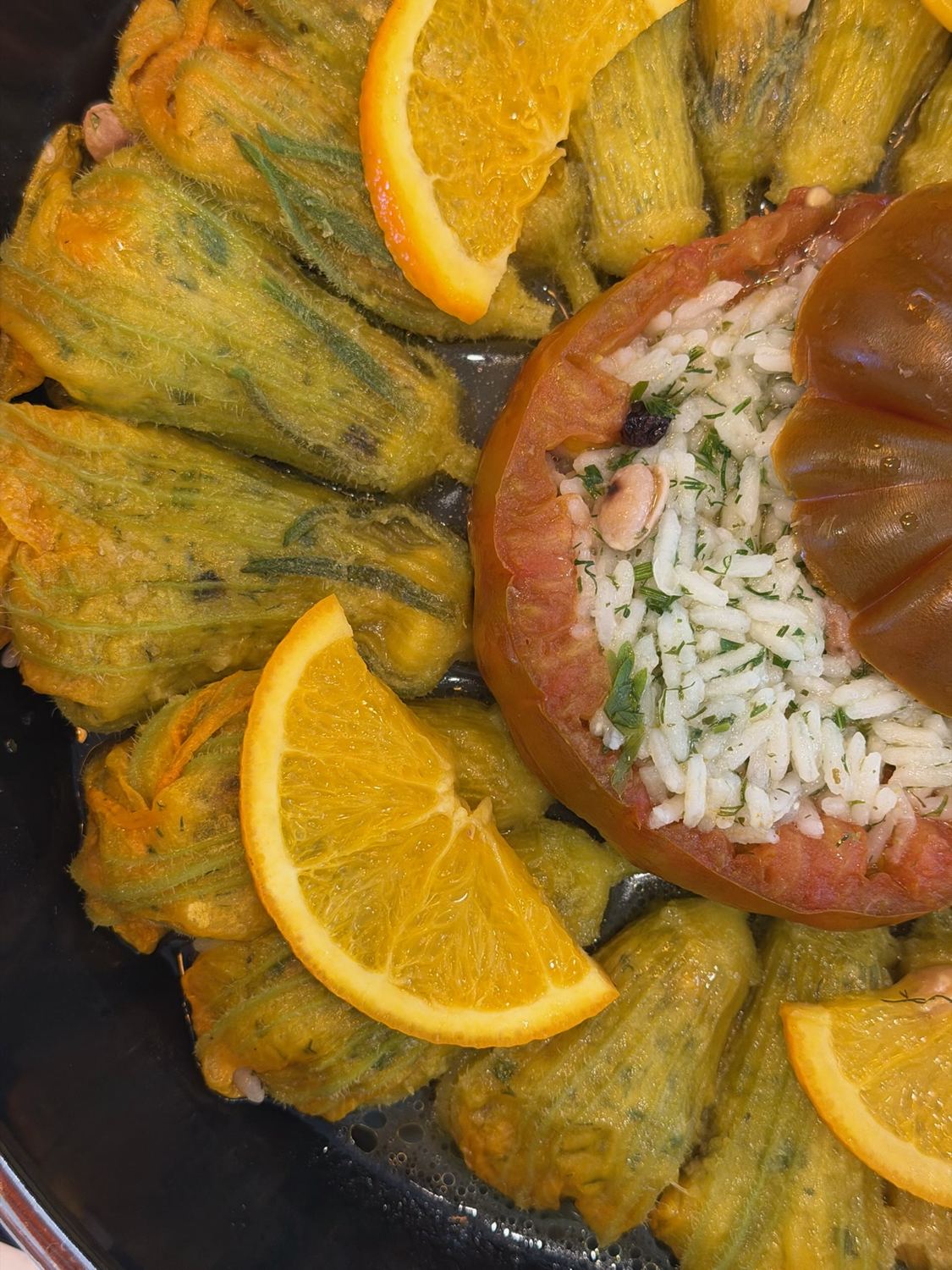
Stuffed courgette flowers and tomato

Stuffed courgette flowers and tomato

Courgette flowers filled with herbed rice, a stuffed tomato with its lid in the middle, and slices of orange.

  • Serves 4
  • Prep 40 min (incl. 20 min soaking)
  • Cook 25-30 min
  • Rest 15 min
Jump to recipe ↓

The story

Courgette flowers turn up at the market for only a short stretch, picked early in the morning while they are still open. We fill them with herbed rice and set a large tomato in the middle, stuffed with the same filling and topped with its own lid. The flowers are arranged around it, with orange slices on top.

The balance of flavours

As it cooks, the tomato gives its juice to the rice and a gentle sourness to the filling. The orange adds freshness to the olive-oil filling. The delicate, slightly sweet taste of the flowers holds its own next to the tomato.

To make something like it at home

Ingredients

  • 12-15 courgette flowers
  • 1 large tomato (about 250 g)
  • 1 cup (200 ml, about 180 g) rice
  • 1 onion
  • Half a bunch (about 20 g) of dill or parsley
  • Half a cup (100 ml) olive oil
  • 1 orange
  • 1 tsp (5 ml) salt

Method

  1. Soak the rice in warm water for 20 minutes and drain. Gently pinch out the stamen from each flower.
  2. Slice the top off the tomato like a lid and scoop out the inside with a spoon; chop the scooped flesh finely.
  3. Soften the onion in half the olive oil, then stir in the rice, tomato flesh, salt and chopped herbs.
  4. Fill the flowers and the tomato about two thirds full and put the lid back on the tomato. Set the tomato in the middle of the pan with the flowers around it.
  5. Arrange the orange slices on top, then drizzle over the remaining olive oil. Add hot water to come halfway up the stuffed flowers and tomato, cover and cook on a low heat for 25-30 minutes.
  6. Take the pan off the heat and leave it covered for 15 minutes; serve warm or at room temperature.
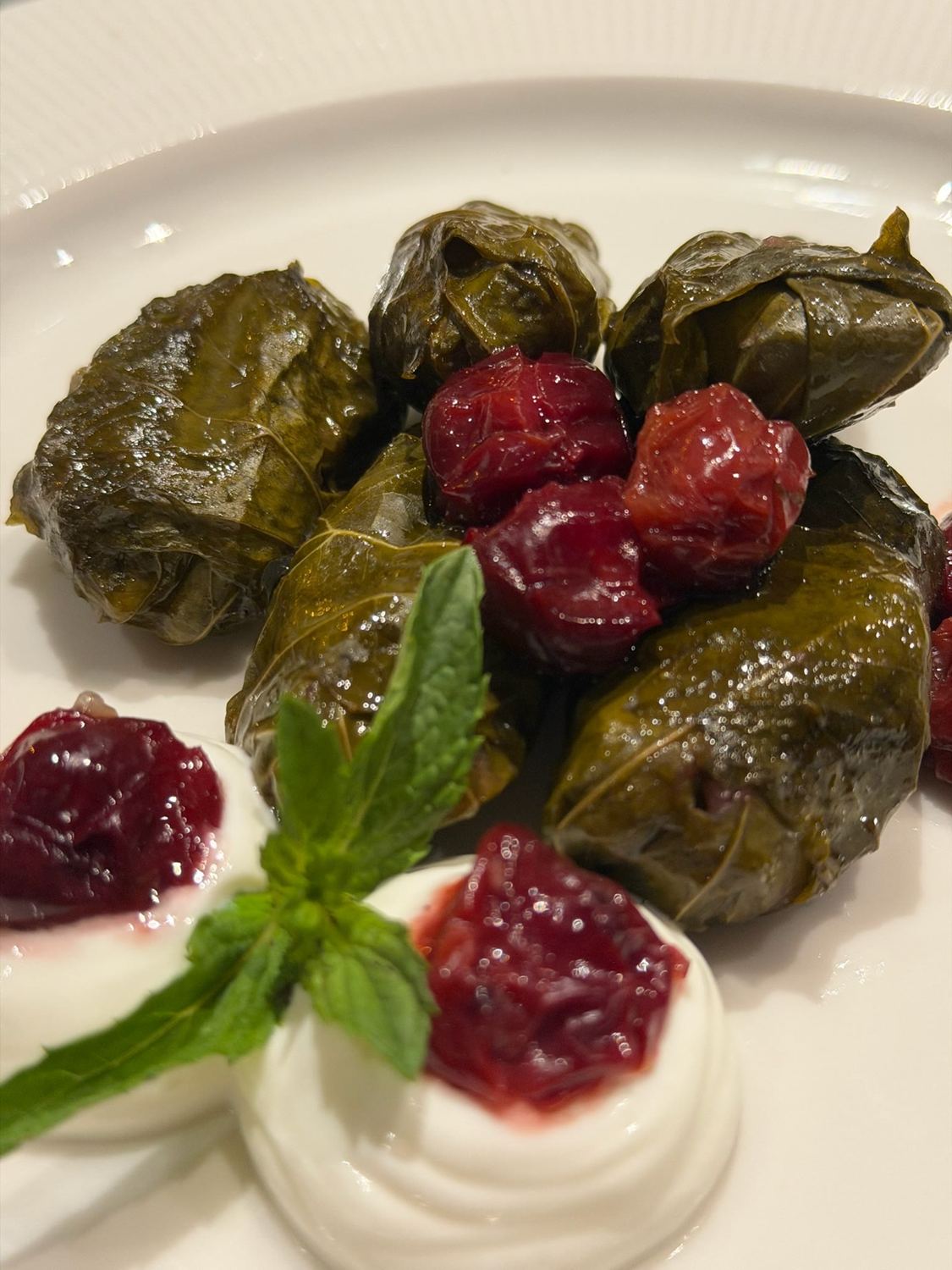
Vine-leaf rolls with sour cherries

Vine-leaf rolls with sour cherries

Stuffed vine leaves with sour cherries and yoghurt.

  • About 30 rolls, serves 4-6
  • Prep 1 hr
  • Cook 40-45 min
  • Rest 30 min
Jump to recipe ↓

The story

Yaprak sarma (vine leaves wrapped around a rice filling) is a familiar dish in Türkiye. Add sour cherries and that familiar taste goes somewhere quite different. Pairing sour cherries with stuffed vine leaves is not a new idea in Anatolian cooking; we love this old match and bring it to the table in early summer, when sour cherries reach the market. A cool spoonful of yoghurt and a sprig of mint sit alongside.

The balance of flavours

The sour cherries add a gentle sourness and a fruity note to every bite, balancing the soft olive-oil richness of the rolls. Yoghurt adds a cool, creamy base that softens both the acidity and the slight bitterness of the leaves.

To make something like it at home

Ingredients

  • About 30 vine leaves (brined or fresh)
  • 1 cup (200 ml, about 180 g) rice
  • 2 onions
  • 1 cup (200 ml, about 150 g) pitted sour cherries (fresh or frozen)
  • Half a cup (100 ml) olive oil
  • 1 tsp (5 ml) sugar
  • 1 tsp (5 ml) salt
  • 1 tsp (5 ml) dried mint
  • 200 g thick strained yoghurt, to serve

Method

  1. Soak brined leaves in a few changes of water to remove the salt; blanch fresh leaves in boiling water for a few seconds.
  2. Soften the onions in the olive oil, then stir in the rice, salt, sugar, mint and half the sour cherries.
  3. Place a little filling on the veined side of each leaf, roll tightly and pack into a pan.
  4. Scatter the rest of the cherries on top, add hot water to just cover, weigh down with an upturned plate and simmer gently for 40-45 minutes.
  5. Let them cool in the pan, then serve with yoghurt and the cherry cooking juices.

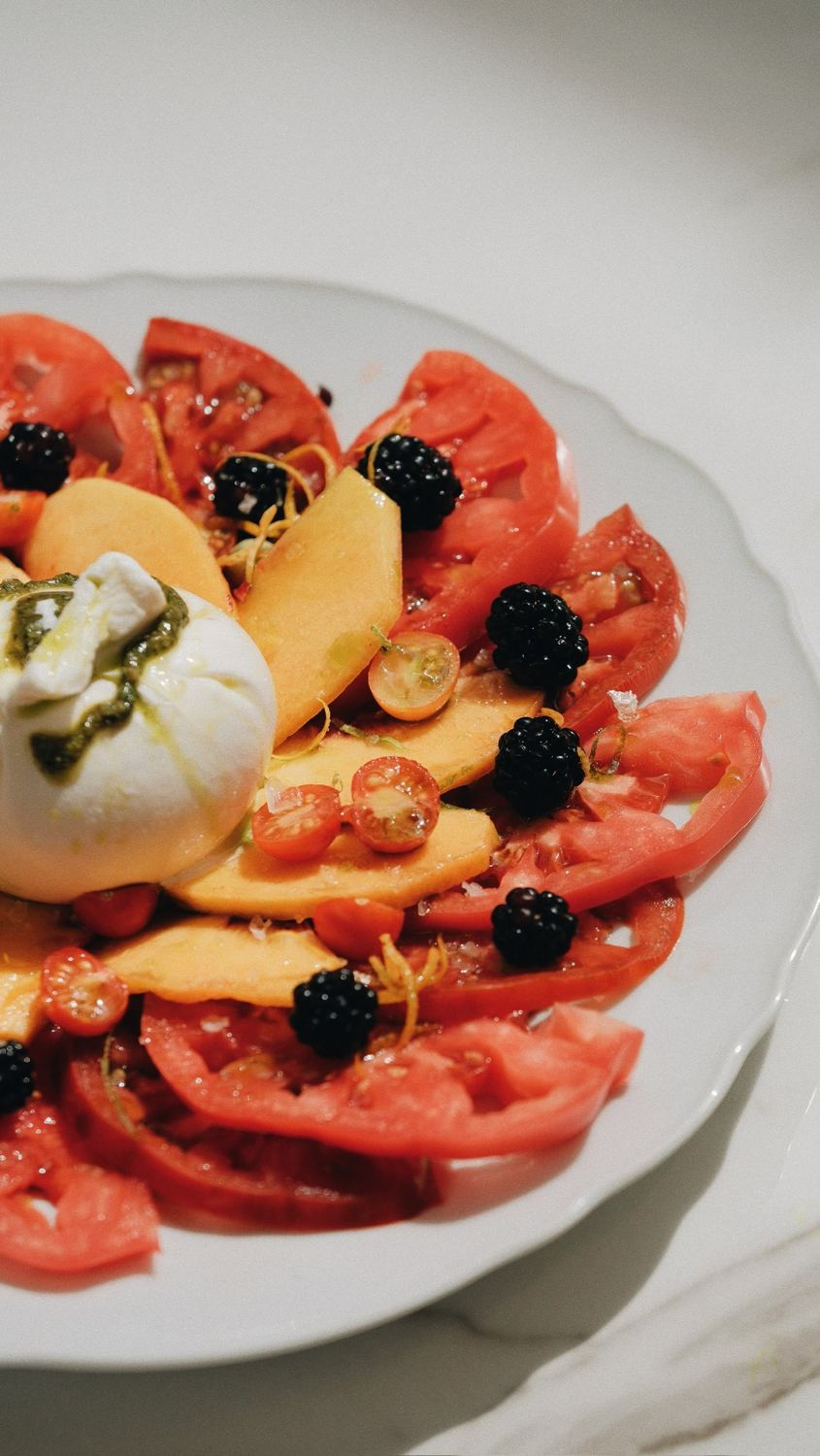
Burrata with tomatoes and summer fruit

Burrata with tomatoes and summer fruit

A summer plate of soft burrata, ripe tomatoes, blackberries and lemon zest.

  • Serves 4 as a starter
  • Prep 15 min
  • Rest 30 min (burrata coming to room temperature)
Jump to recipe ↓

The story

In the weeks when the market tomatoes are at their ripest and most fragrant, this plate more or less builds itself. Burrata in the middle, tomatoes fanned around it, seasonal fruit and blackberries tucked in between. Cut it open and the creamy centre runs into the tomato juices, which is the best moment on the plate.

The balance of flavours

The gentle acidity of the tomatoes balances the richness of the burrata, and a pinch of salt brings out their sweetness. Sweet fruit and slightly tart blackberries round out that balance, and the creamy burrata brings it all together. Lemon zest and the green herb oil add freshness without adding more sourness.

To make something like it at home

Ingredients

  • 1 burrata (about 200 g)
  • 2-3 large ripe tomatoes (about 500 g)
  • 150 g cherry tomatoes
  • 1 ripe peach or nectarine (or 200 g ripe melon)
  • 100 g blackberries
  • Zest of 1 lemon
  • 2-3 tbsp (30-45 ml) basil pesto or good olive oil
  • Flaky salt

Method

  1. Take the burrata out of the fridge half an hour before serving; it is creamier when not fridge-cold.
  2. Slice the tomatoes, halve the cherry tomatoes, spread them on a plate and season with flaky salt.
  3. Slice the fruit thinly and tuck it between the tomatoes, then scatter the blackberries.
  4. Set the burrata in the middle and spoon over the pesto or olive oil.
  5. Finish with grated lemon zest and serve straight away.

Tomato carpaccio

Tomato carpaccio

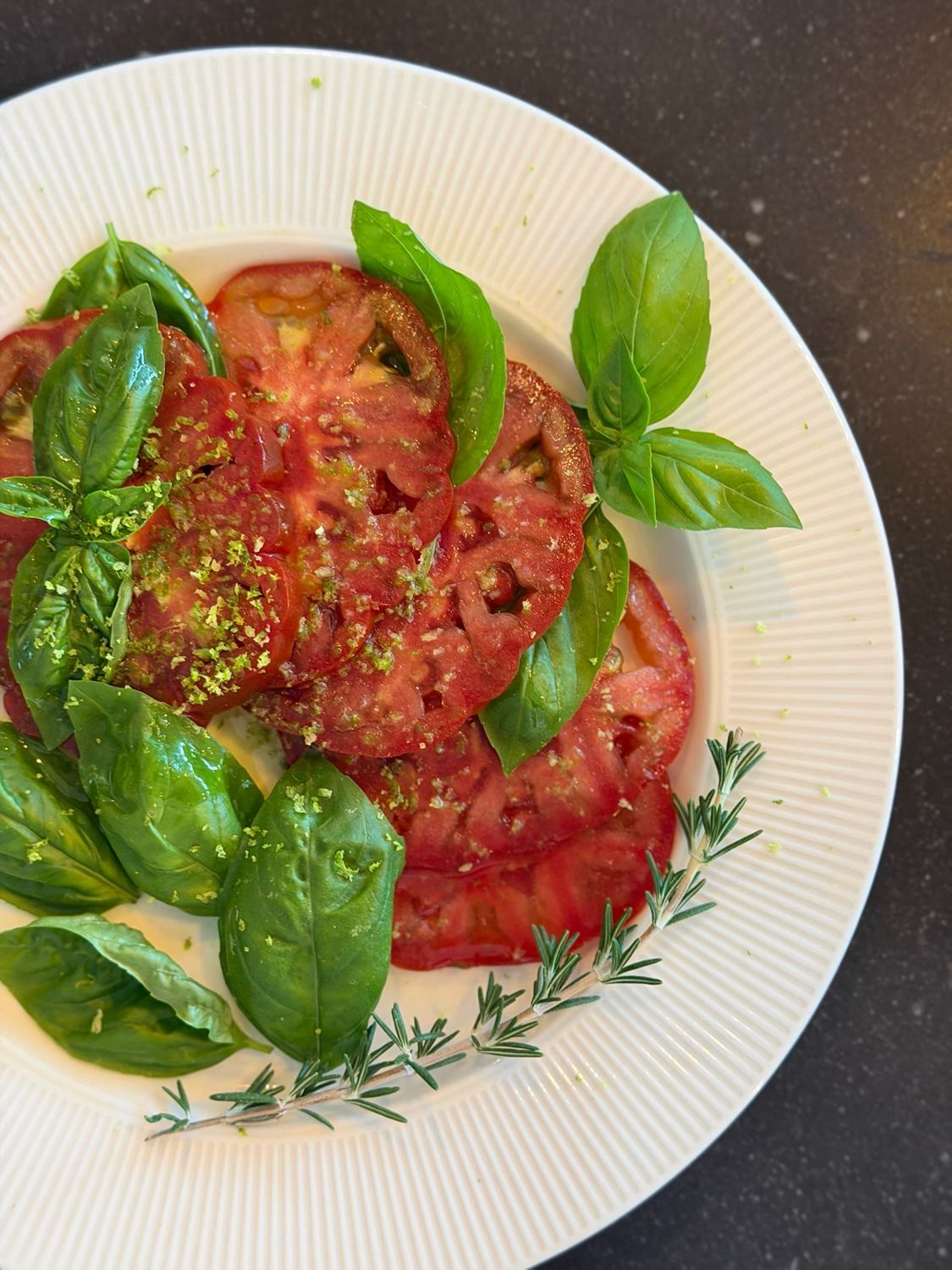
Thinly sliced tomatoes with basil, lime zest and olive oil.

  • Serves 4 as a starter
  • Prep 10 min
  • Rest 5 min
Jump to recipe ↓

The story

There is nothing to hide behind on this plate: if the tomatoes are good, so is the dish. In summer we pick the ripest tomatoes at the market and slice them thin, then add basil, lime zest and olive oil. It is the kind of plate that wakes up your appetite on a hot summer day.

The balance of flavours

Salt draws out the tomato's juice and sweetness, and olive oil carries the aroma. Lime zest adds a fresh aroma without making the tomatoes any sharper. Basil and tomato are one of the best-known pairings in Mediterranean cooking.

To make something like it at home

Ingredients

  • 3-4 large ripe tomatoes (about 600 g)
  • A handful (about 15 g) of fresh basil
  • 1 lime
  • 3 tbsp (45 ml) extra virgin olive oil
  • Flaky salt

Method

  1. Slice the tomatoes as thinly as you can with a sharp knife.
  2. Lay the slices on a wide plate, slightly overlapping, and sprinkle with flaky salt.
  3. Leave for a few minutes, then drizzle with olive oil.
  4. Tuck in the basil leaves and grate the lime zest over at the very end, just as you serve.

Beetroot with orange

Beetroot with orange

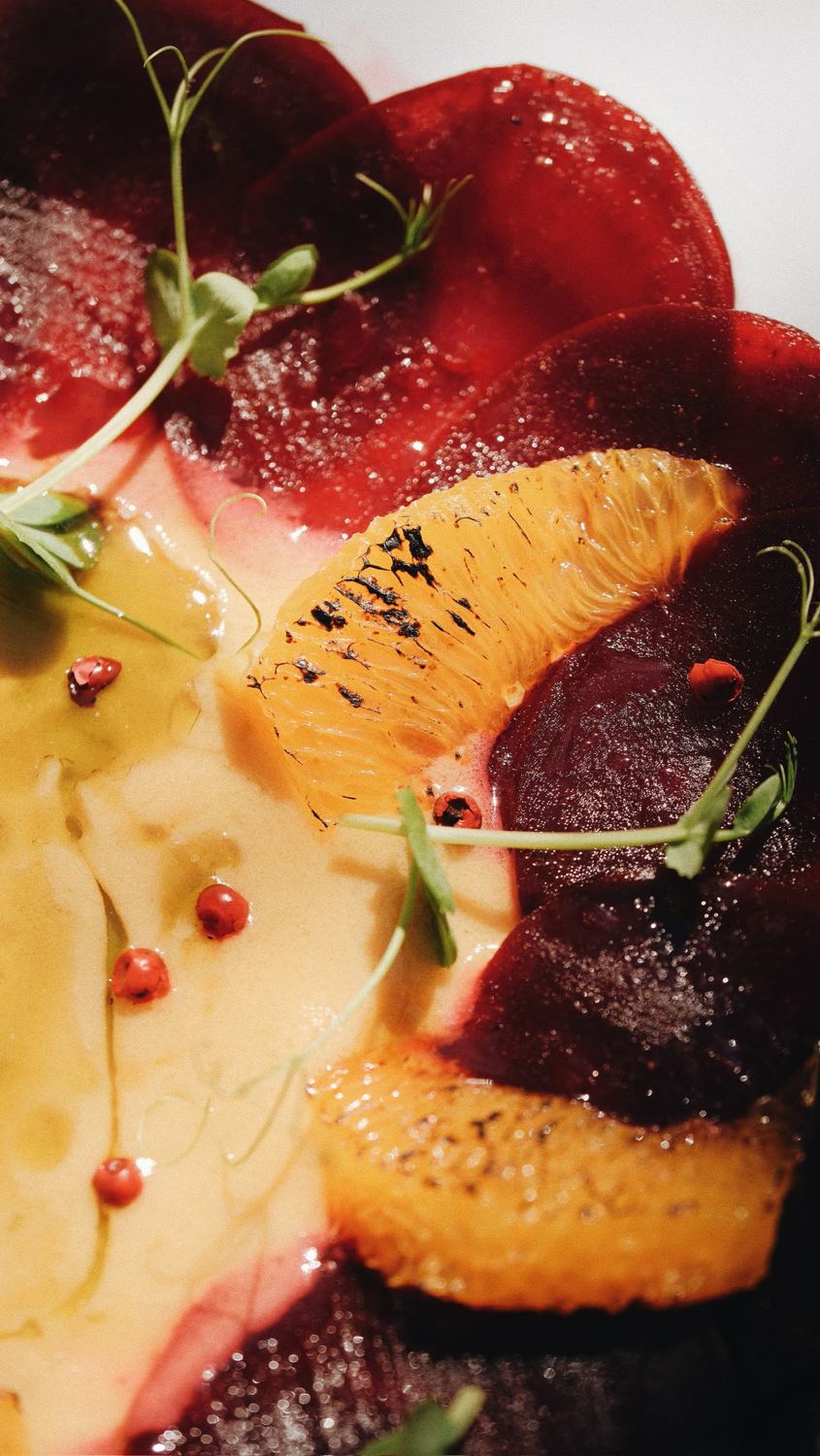
Thinly sliced beetroot with orange, pink peppercorns and fresh shoots.

  • Serves 4 as a starter
  • Prep 15 min
  • Cook 50-60 min
  • Rest 20 min
Jump to recipe ↓

The story

Beetroot is one of the vegetables that tastes most clearly of the earth. We pair it with orange on one plate and finish with a few pink peppercorns and fresh shoots. A plate that lifts the table with its colour as much as its taste.

The balance of flavours

The fresh aroma of orange complements the earthy taste of beetroot, and its light acidity and fruity sweetness balance the plate. Pink peppercorns are not hot; they leave a light, fruity fragrance, while the shoots add a fresh crunch next to the soft beetroot.

To make something like it at home

Ingredients

  • 3 medium beetroots (about 450 g)
  • 2 oranges
  • 3 tbsp (45 ml) extra virgin olive oil
  • 1 tsp (5 ml) pink peppercorns
  • A handful (about 30 g) of shoots (pea shoots or similar)
  • A pinch of salt

Method

  1. Wash the beetroots, wrap them in foil and roast at 200°C for about 50-60 minutes, until a knife slides in easily.
  2. Once cool, peel and slice them thinly.
  3. Cut the peel and pith from the oranges and slice out the segments, saving the juice in a bowl.
  4. Whisk the juice with the olive oil and a pinch of salt, then spoon it over the beetroot.
  5. Tuck the orange segments in, crush the pink peppercorns lightly between your fingers, scatter them over and finish with the shoots.

Lasagne

Lasagne

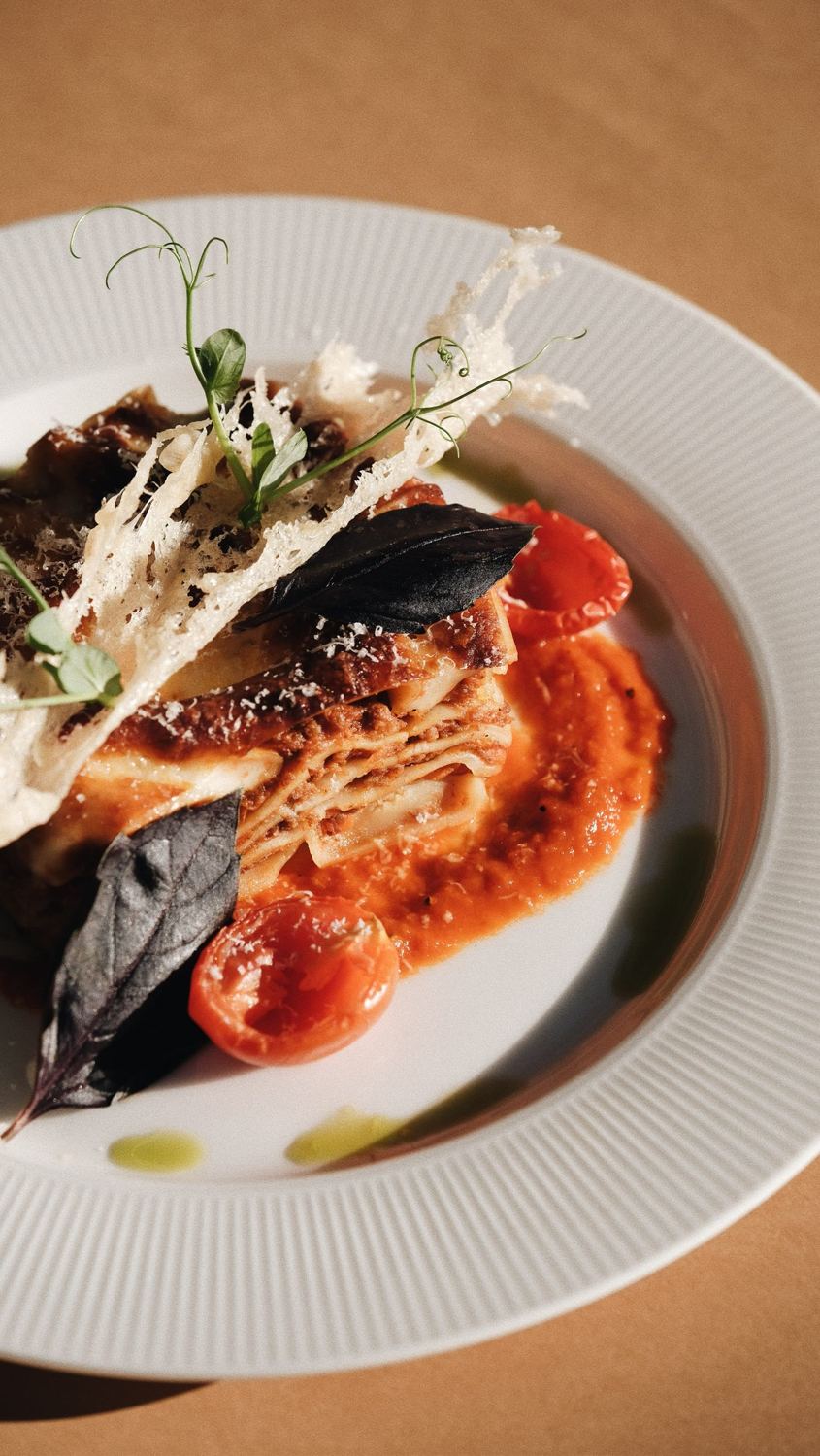
Layered lasagne with plenty of tomato.

  • Serves 6, 20 x 30 cm baking dish
  • Prep 30 min
  • Cook 1 hr 25 min (sauce 40 min, oven 45 min)
  • Rest 15 min
Jump to recipe ↓

The story

Lasagne is not a dish to rush: the sauce needs time to thicken, the layers need to settle, and once it is out of the oven it wants a little rest. Ours comes to the table with plenty of tomato. It is a plate for a cool evening in the courtyard, eaten slowly.

The balance of flavours

Tomato and parmesan deepen the flavour of the lasagne; both are rich in glutamates, the source of umami. The acidity of the tomato also balances the softness of the béchamel, so the dish never feels heavy.

To make something like it at home

Ingredients

  • 12 dried lasagne sheets (about 250 g)
  • 400 g minced beef
  • 1 onion
  • 2 tbsp (30 ml) olive oil
  • 500 g grated fresh tomatoes or passata
  • 1 tsp (5 ml) salt and some black pepper
  • 750 ml béchamel sauce (shop-bought, or homemade: 60 g butter, 60 g plain flour, 750 ml milk, a pinch of salt and nutmeg; this makes about 750 ml, so use it all)
  • 100 g grated parmesan
  • A handful (about 15 g) of fresh basil

Method

  1. Soften the onion in the olive oil, add the mince and cook until its liquid has gone. Add the tomatoes, salt and pepper and simmer gently, stirring now and then, for 30-40 minutes until thick.
  2. If you are making the béchamel, melt the butter, stir in the flour and cook for 2 minutes. Whisk in the milk a little at a time and cook for 5-6 minutes until it thickens; season with salt and nutmeg. You will use the whole batch in the lasagne.
  3. Heat the oven to 180°C. If your sheets need boiling, cook them as the packet says and drain. Spread a few spoonfuls of sauce over the base of the dish, then layer sheets, sauce, béchamel and parmesan in that order, four times, finishing with béchamel and parmesan.
  4. Cover the dish with foil and bake for 25 minutes, then uncover and bake for another 15-20 minutes until golden.
  5. Let it rest for 15 minutes before cutting so the layers hold. Tear the basil leaves over the top as you serve.

Poached pear

Poached pear

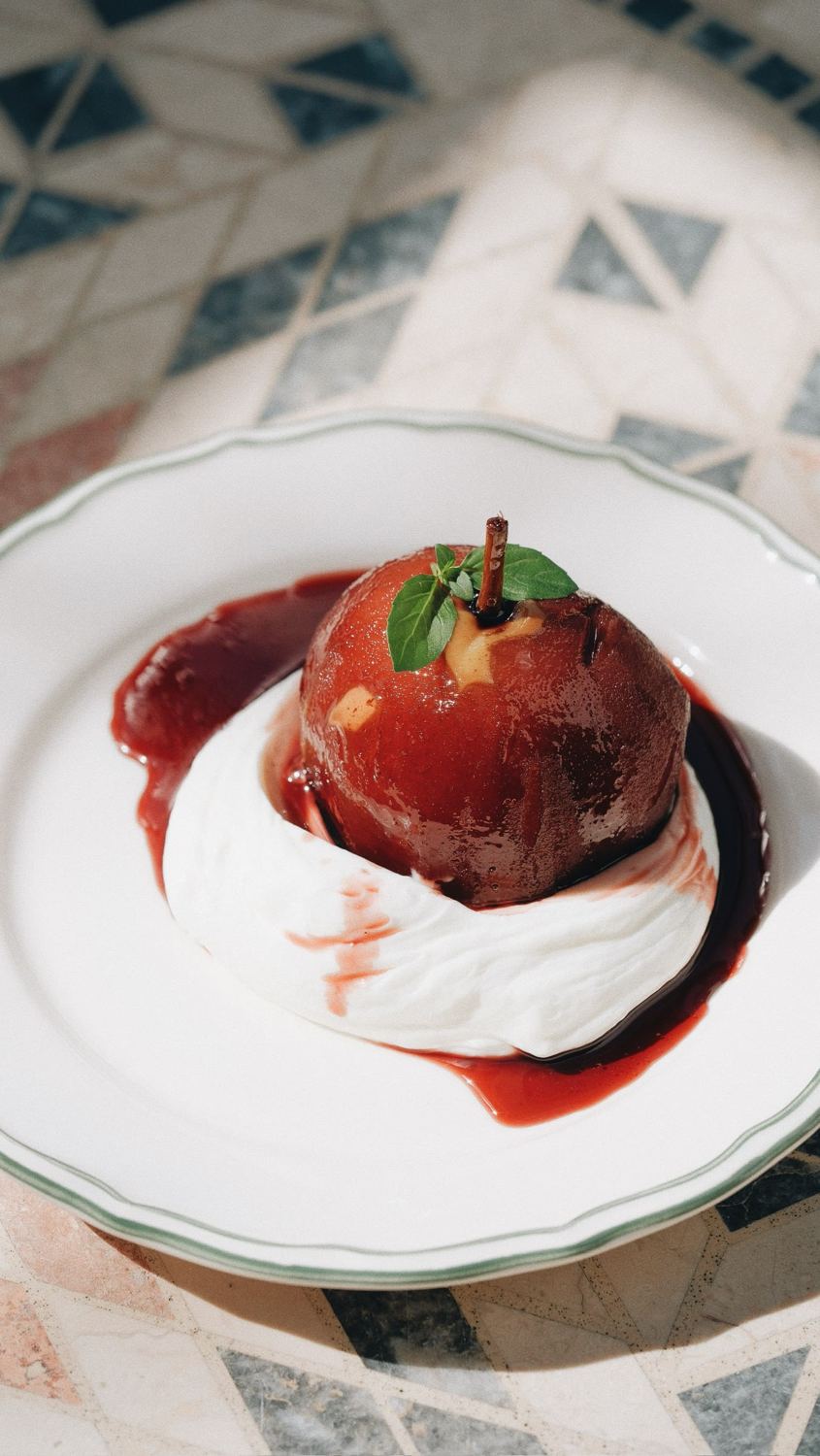
A pear poached in a deep red sauce, set on cream.

  • Serves 4
  • Prep 15 min
  • Cook 45-60 min
  • Rest 1 hr
Jump to recipe ↓

The story

A firm pear, poached patiently, turns soft enough to cut with a spoon and takes its colour from the liquid it cooks in. We sit it on a bed of white cream and pour its dark red sauce around it. A sweet ending to a meal that does not weigh you down.

The balance of flavours

As it poaches, the pear soaks up the sweetness and colour of the sauce, while the cream softens that concentrated sweetness with something cool and light. Soft fruit next to airy cream gives two different textures in every spoonful.

To make something like it at home

Ingredients

  • 4 firm pears (about 800 g)
  • 1 litre red grape juice or sour cherry juice
  • 3-4 tbsp (45-60 ml) sugar
  • 1 cinnamon stick
  • A few strips of lemon peel
  • 200 ml cold whipping cream (at least 30% fat) or 200 g thick strained yoghurt
  • 1 tbsp (15 ml) icing sugar for the cream (optional)

Method

  1. Peel the pears, keeping the stalks on, and trim the bases so they stand upright.
  2. Bring the juice to the boil with the sugar, cinnamon and lemon peel.
  3. Add the pears and simmer gently, turning now and then, for 20-30 minutes until a knife slides in easily.
  4. Take the pan off the heat and let the pears cool in the liquid; their colour deepens as they sit. Chill them afterwards if you like.
  5. Lift out the pears. Boil the liquid over a medium heat until about 250 ml is left; depending on the pan and the heat this takes 20-30 minutes. It is ready when it coats the back of a spoon in a thin layer, and it thickens a little more as it cools. Let it cool a little.
  6. Whip the cold cream (with the icing sugar, if using) until it holds soft peaks. If you are using yoghurt, there is no need to whip it; just stir it smooth.
  7. Spread the cream on the plate, set a pear on top and spoon the syrup around it. Serve the pears at room temperature or chilled.

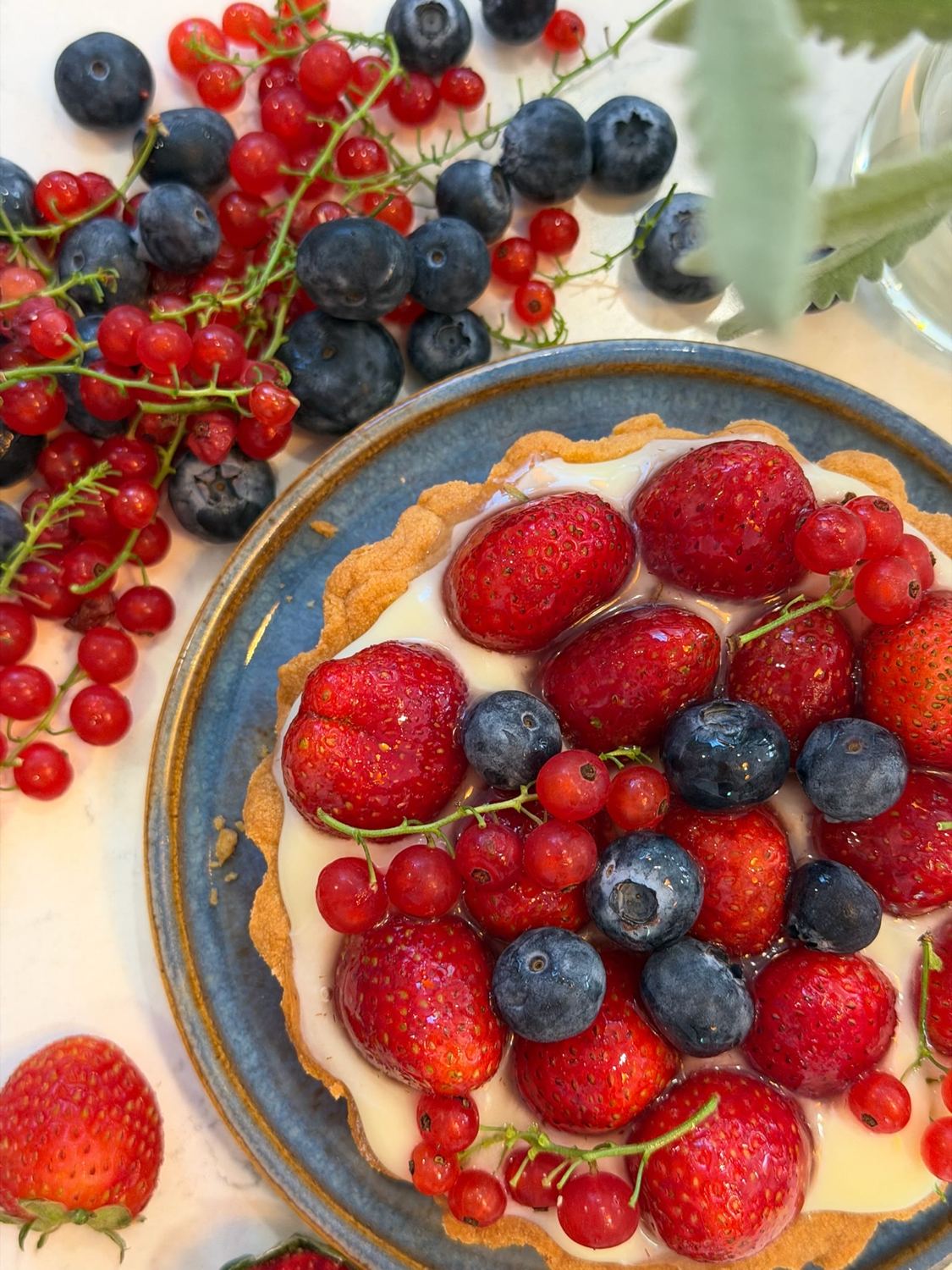
Summer berry tart

Summer berry tart

Crisp pastry, cream, strawberries, blueberries and redcurrants.

  • 8 slices, 22-24 cm tart tin
  • Prep 40 min
  • Cook 25-27 min
  • Rest 45 min chilling, 30 min cooling
Jump to recipe ↓

The story

When summer berries reach the market, it is hard not to make this tart. Cream in a crisp pastry case, topped with glossy strawberries, blueberries and redcurrants still on their stems. A summer evening in the courtyard.

The balance of flavours

The sharpness of the redcurrants and strawberries balances the richness of the cream and keeps the tart fresh rather than heavy. Crisp pastry, soft cream and juicy fruit together give three textures in every bite.

To make something like it at home

Ingredients

  • Pastry (or use a shop-bought baked 22-24 cm case)
  • 200 g plain flour
  • 100 g cold butter, diced
  • 50 g icing sugar
  • 1 egg yolk
  • 1-2 tbsp (15-30 ml) cold water
  • A pinch of salt
  • Filling
  • 200 ml cold whipping cream or double cream (at least 30% fat)
  • 2 tbsp (30 ml) icing sugar and a little vanilla
  • 250 g strawberries
  • 100 g blueberries
  • A few sprigs (about 50 g) of redcurrants
  • 2 tbsp (30 ml) apricot jam

Method

  1. If you are using a shop-bought baked case, go straight to step 5. Mix the flour, icing sugar and salt, then rub in the cold butter with your fingertips until it looks like coarse sand.
  2. Add the egg yolk and cold water and bring the dough together without kneading. Shape it into a flat disc, wrap it and chill for 30 minutes.
  3. Roll the pastry out 3-4 mm thick, line the tin and prick the base with a fork. Chill the lined tin for 15 minutes; cold pastry shrinks less in the oven.
  4. Heat the oven to 180°C. Line the pastry with baking paper, fill it with dried beans or baking weights and bake for 15 minutes. Remove the paper and weights and bake for another 10-12 minutes until golden. Let it cool completely.
  5. Whip the cold cream with the icing sugar and vanilla until it holds soft peaks that just bend over when you lift the whisk. A cold bowl and whisk help it whip.
  6. Spread the cream into the case close to serving so the pastry stays crisp.
  7. Arrange the strawberries, blueberries and redcurrants on top.
  8. Warm the jam with a few drops of water and brush it over the fruit for shine.

Taste them at the table

She Kitchen reopens in April 2027. Join the list to hear first.

Get reopening updates

She Kitchen · Ölüdeniz Blu · Back to top ↑